
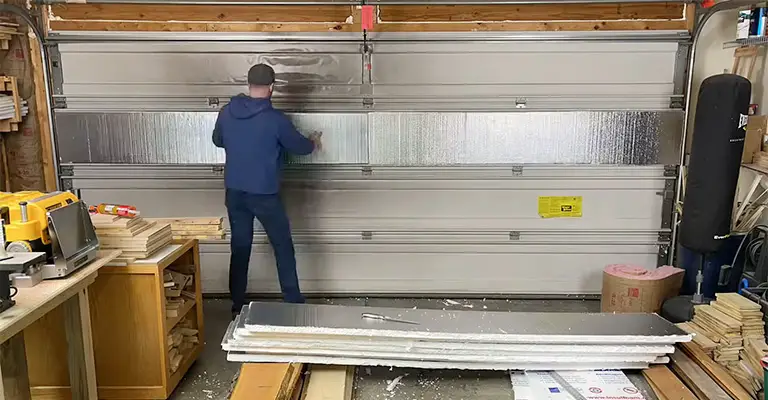
If you’re replacing your garage door or fitting out a new home on the Sunshine Coast, you’ve probably come across the term “insulated garage door” — and wondered whether the extra cost is actually justified. Short answer: in most cases, yes. But the real value depends on how you use your garage and where your home is positioned.
This guide breaks down the genuine benefits, the real costs, and the situations where insulation matters most — so you can make a confident, informed decision. For specific advice tailored to your property, the team at Sunshine Coast Garage Door Guys is always happy to help.
Related reading: How Much Does a New Garage Door Cost? — a helpful overview if you’re also considering the full door replacement cost.
Quick Answer: Are Insulated Garage Doors Worth It?
Yes — insulated garage doors are worth it for the majority of Australian homeowners, especially those with attached garages or spaces used as workshops, home gyms, or extra living areas. They improve energy efficiency, reduce noise transfer, regulate temperature, and add structural strength to the door itself. For detached garages used purely for car storage in a mild climate, a non-insulated door may be sufficient.
What Is an Insulated Garage Door?
An insulated garage door has one or more layers of insulating material — typically polystyrene or polyurethane foam — sandwiched within the door panels. This contrasts with a single-layer (non-insulated) door, which is simply a sheet of steel or aluminium with no thermal or acoustic barrier.
Most insulated doors are built in one of three configurations:
- Single-layer: One sheet of steel — no insulation.
- Double-layer: A steel skin with an insulation backing bonded to the inside face.
- Triple-layer: Two steel skins with a foam core in between — the most thermally and acoustically effective option.
Benefits of Insulated Garage Doors
1. Better Energy Efficiency
Your garage shares walls, ceilings, or floors with your home. Heat gain through an uninsulated garage door transfers directly into adjacent living spaces, forcing your air conditioner to work harder. Heating and cooling accounts for a significant portion of household energy use — and a well-insulated garage door helps reduce that load year-round.
2. Temperature Regulation
On a typical Queensland summer day, an uninsulated garage can reach temperatures well above 50°C. An insulated door can keep the interior 15–20°C cooler, making the space usable for storage, a workshop, or a home gym — without the oppressive heat.
3. Noise Reduction
Insulated doors significantly reduce the sound of the door mechanism itself — rollers, springs, and opener motors are all dampened by the mass and softness of the insulation layer. They also block external noise from traffic and neighbourhood activity. Some insulated doors offer up to 18 dB of noise reduction compared to non-insulated alternatives.
Related reading: Garage Door Opener Repair: What You Need to Know — including how opener noise can be reduced alongside door upgrades.
4. Increased Door Strength and Durability
The insulation core in a triple-layer door acts as a structural reinforcement. These doors resist warping, denting, and twisting under load far better than single-skin alternatives — a real advantage in the Sunshine Coast’s coastal environment, where salt air, humidity, and strong winds can stress less robust door panels.
5. Home Resale Value
Energy-efficient home features are increasingly valued by buyers. An insulated garage door is a visible, tangible upgrade that signals a well-maintained, efficient property — especially relevant in the current Queensland market.

Insulated vs Non-Insulated Garage Doors: Side-by-Side Comparison
| Feature | Insulated Door | Non-Insulated Door |
|---|---|---|
| Energy efficiency | High | Low |
| Noise level | Quiet | Louder |
| Durability | Stronger (layered steel) | Weaker |
| Upfront cost | Higher ($1,200–$4,000) | Lower ($700–$1,500) |
| Temperature control | Yes | No |
| Best for | Attached garages, living spaces, workshops | Detached garages, mild climates |
How Much Do Insulated Garage Doors Cost?
Insulated garage doors do cost more upfront, but the gap narrows when you factor in energy savings and longevity. Here’s a general cost guide for the Australian market:
| Door Type | Average Cost (AUD) | Typical Lifespan |
|---|---|---|
| Non-insulated steel | $700 – $1,500 | 10–15 years |
| Single-layer insulated | $1,200 – $2,000 | 15–20 years |
| Double/triple-layer insulated | $2,000 – $4,000+ | 20–30 years |
Installation costs are additional and vary by door size, opener type, and site requirements. For an accurate quote on your property, contact the Sunshine Coast Garage Door Guys team — we provide free, no-obligation quotes across all Sunshine Coast suburbs.
When Insulated Garage Doors Are Worth It
Insulation makes the most sense when one or more of the following applies to your situation:
- Your garage is attached to your home or has a room above it — thermal transfer is direct.
- You use the garage as a workshop, gym, studio, or any space where you spend time.
- You live in a home with ducted air conditioning — insulation reduces the load on adjacent systems.
- Noise reduction matters — street traffic, neighbours, or the door mechanism itself.
- You’re on the coast — insulated steel-sandwich doors handle humidity and salt air better.
- You want a longer-lasting door — the layered construction is more impact-resistant and durable.
When Insulated Garage Doors May Not Be Necessary
In some scenarios, a non-insulated door is perfectly adequate and will save you money upfront:
- Your garage is completely detached from the house with no adjacent living spaces.
- The garage is used purely for car parking — no time is spent inside.
- Your local climate is mild year-round with minimal temperature extremes.
- Budget is the primary constraint and energy savings are a lower priority.
Even in these situations, it’s worth getting a comparison quote — the price difference between entry-level insulated and non-insulated doors has narrowed in recent years. Get in touch with us to see what makes sense for your specific setup.
What R-Value Should You Choose?
The R-value measures a material’s resistance to heat transfer. The higher the R-value, the more effective the insulation. For garage doors, here’s a practical guide:
| R-Value | Insulation Level | Best For |
|---|---|---|
| R-6 | Basic | Mild climates, minimal heat loss |
| R-12 | Moderate | Subtropical climates like Sunshine Coast |
| R-18+ | High | Cold climates, heated/cooled garages |
For most Sunshine Coast homes — where summer heat is the primary concern — an R-12 door provides excellent performance at a reasonable price point. Homes with air-conditioned garages or workshops may benefit from R-18 or above.

Types of Garage Door Insulation
Not all insulation is the same. The three main types used in garage doors are:
- Polystyrene (EPS): Rigid foam boards inserted into door cavities. Cost-effective and widely available. Good thermal performance.
- Polyurethane foam: Injected foam that bonds to both steel skins, providing a structurally superior core. Better R-value per centimetre of thickness.
- Reflective insulation: Foil-faced material that reflects radiant heat. Sometimes added to existing doors as a retrofit solution.
Polyurethane-core doors are generally the premium choice for the Sunshine Coast’s subtropical climate, offering the best balance of thermal resistance, strength, and durability.
How Long Do Insulated Garage Doors Last?
A well-maintained insulated garage door typically lasts 15–30 years, depending on construction quality and how well it’s serviced. The steel-insulation-steel sandwich construction resists warping and denting far better than single-skin doors, particularly in coastal and high-humidity environments.
Related reading: Garage Door Spring Replacement Guide — springs are one of the most common wear components, regardless of door type.
Final Verdict: Are Insulated Garage Doors Worth It?
For most Sunshine Coast homeowners — yes, insulated garage doors are absolutely worth it. The energy savings, improved comfort, noise reduction, and durability benefits stack up convincingly, particularly for attached garages and any space used beyond simple car storage.
The upfront cost premium is real but modest compared to the lifetime value of a door that performs better, lasts longer, and makes your home more comfortable and efficient. And if you’re already replacing a door, the incremental cost of going insulated is typically small.
The Sunshine Coast Garage Door Guys team installs and services insulated garage doors across all Sunshine Coast suburbs. We work with multiple leading Australian brands and can recommend the right door and R-value for your property. Call us on (07) 5451 8776 or request a free quote online — we do it once, we do it right.
Related reading: Roller Door vs Sectional Garage Door: Which Is Right for You? — if you’re also deciding between door styles, this guide helps narrow it down.
Frequently Asked Questions
Can I add insulation to my existing garage door?
Yes, retrofit insulation kits are available for some existing doors — typically using foil-backed polystyrene panels that fit into the door’s recessed sections. That said, the result is rarely as effective as a purpose-built insulated door, and if your door is already ageing, a full replacement often makes more practical sense.
Does an insulated garage door make a noticeable difference to home temperature?
In most attached garages, yes — particularly in Queensland’s summer heat. An insulated door reduces heat radiating into the garage and the rooms adjacent to it, which can take real pressure off your air conditioning system and make the space significantly more comfortable to be in.
Is an insulated garage door louder or harder to operate than a standard door?
No — insulated doors are generally quieter to operate, not louder. The extra mass dampens vibration through the mechanism, and the panel construction reduces the metallic rattle common in single-skin doors. Paired with a quality opener, the difference is noticeable.
Do insulated garage doors require any special maintenance?
Not especially. The same regular maintenance applies — lubricating the springs, rollers, and hinges, checking the weather seals, and having the balance tested annually. The insulation core itself is sealed within the panels and requires no ongoing attention.
How do I know which insulated door is right for my Sunshine Coast home?
The right choice depends on your garage’s orientation, how the space is used, and your budget. The team at Sunshine Coast Garage Door Guys can assess your specific setup and recommend the best door type, R-value, and brand for your property — call (07) 5451 8776 for a free quote.
