
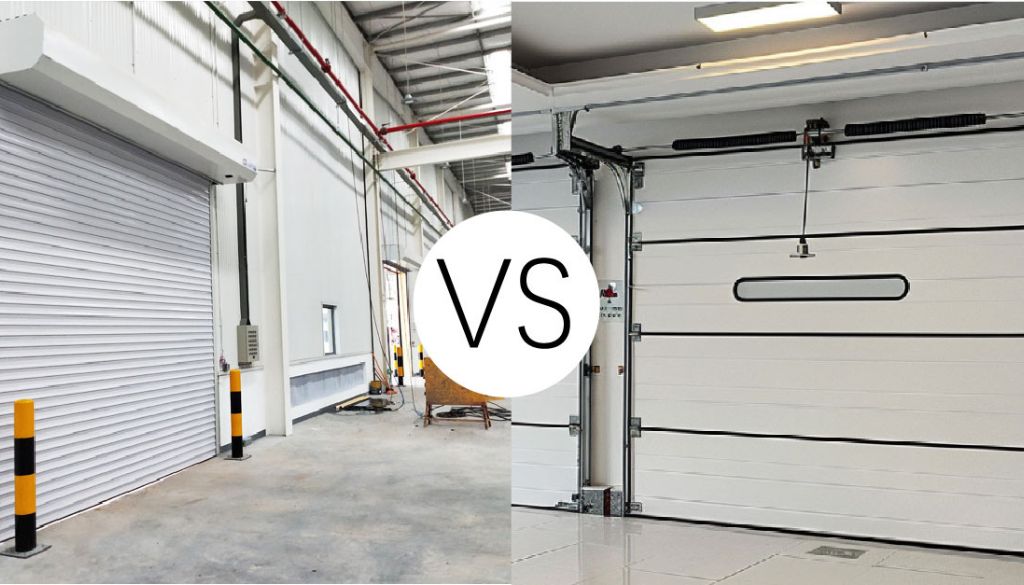
Choosing between a sectional door and a roller door is one of the most important decisions you’ll make when building, renovating, or replacing a garage. Both options are popular across Sunshine Coast homes — but they suit different spaces, design goals, and practical needs. This guide breaks down every key difference so you can make a confident, informed choice.
What Is a Roller Garage Door?
A roller door is made from a ribbed steel curtain that coils upward into a cylindrical drum mounted above the garage opening. When you activate the door, the steel panels roll into the drum — keeping the space inside your garage completely clear.
Roller doors are typically manufactured from corrugated or ribbed steel in a range of colours and gauges. They’re widely used in residential garages, garden sheds, industrial warehouses, and commercial shopfronts across the Sunshine Coast. Their compact drum mechanism makes them a practical option for spaces where internal ceiling clearance is limited. Thermal performance is just as important as style when choosing a new door — our detailed guide on insulated garage doors for Sunshine Coast homes covers R-values, cost comparisons, and which insulation type suits the local climate best.
What Is a Sectional Garage Door?
A sectional garage door is made up of horizontal panels — usually four to six — connected by hinges. When opened, the panels travel along a track system and store horizontally along the ceiling of the garage, or at a slight angle depending on the track configuration.
Sectional doors are available in a broad range of materials including steel, timber look, and aluminium, with options for insulation, windows, ventilation panels, and custom colours. They’re the most popular choice for modern residential homes on the Sunshine Coast because they deliver strong kerb appeal and excellent design flexibility.
Security considerations differ between door types, and if you’ve opted for a sectional door with a LiftMaster opener, it’s worth reading our guide covering the best ways to lock a sectional garage door overnight to make sure you’re using every feature available to you.
Key Differences Between Sectional Doors and Roller Doors
The most fundamental difference is how each door opens. A roller door coils upward into a drum above the opening; a sectional door slides along a ceiling track running the depth of the garage. This single mechanical difference drives everything else — from space requirements and installation to design options and security.
Roller doors require space above the opening for the drum, while sectional doors need clear ceiling space along the full interior of the garage. Sectional doors also offer far greater design variety, while roller doors are built around simplicity and practicality.
Side-by-Side Comparison: Roller Door vs Sectional Door
| Feature | Roller Door | Sectional Door |
|---|---|---|
| Design Options | Limited — ribbed/corrugated finish | Wide variety of profiles, textures, colours |
| Space Required | Space above opening for drum | Ceiling track clearance required |
| Insulation | Rarely insulated | Insulated options available |
| Security | Moderate | Higher — individual panel locking |
| Maintenance | Low — fewer moving parts | More components requiring upkeep |
| Panel Replacement | Full door replacement if damaged | Individual panels replaceable |
| Best For | Sheds, commercial spaces, tight ceiling clearance | Homes, renovations, kerb appeal |
Pros and Cons of Roller Doors
Advantages of Roller Doors
- Simple mechanism with fewer moving parts — less to go wrong over time
- Minimal internal ceiling space required, ideal for garages with overhead beams or existing storage
- Practical and reliable for sheds, warehouses, investment properties, and urban garages
- Fast to operate and easy to maintain day-to-day
- Available in a range of steel gauges and colours suitable for Queensland conditions
Disadvantages of Roller Doors
- Limited design options — typically a plain corrugated or ribbed finish with no decorative features
- If the curtain sustains significant damage, the entire door usually requires full replacement
- Generally less secure than sectional doors — no individual panel locking system
- Rarely available with insulation, which is a notable drawback in the Queensland heat
- Less kerb appeal for modern residential homes

Pros and Cons of Sectional Doors
Advantages of Sectional Doors
- Greater design and customisation options — timber look, modern flat panel, custom colours and hardware
- Individual panels can be replaced if one is damaged, rather than replacing the full door
- Higher security potential with multiple locking points across the panel system
- Insulated options available — important for Sunshine Coast heat and coastal humidity
- Can include windows, ventilation louvres, and decorative hardware to match your home’s exterior
- Adds kerb appeal and value to residential properties
Disadvantages of Sectional Doors
- More mechanical components — springs, cables, rollers, tracks — that require periodic servicing
- Requires ceiling clearance inside the garage, which is not available in all configurations
- Installation is more involved than a roller door
Space Requirements: Which Door Works Best?
Space is often the deciding factor for Sunshine Coast homeowners. If your garage has limited headroom, a roller door is typically the better fit. The drum mechanism sits compactly above the opening, requiring only 250–300mm of vertical clearance above the door frame.
Sectional doors need more internal ceiling depth — generally 300–500mm of headroom clearance plus a full run along the ceiling for the track. If your garage has beams, overhead storage, or a low-pitched roof line, a sectional door may be difficult or impossible to install without modifications to the structure.
For tight ceiling clearance: a roller door is the practical choice. For standard or generous ceiling height: either door works well, though sectional doors deliver more performance and visual appeal.
Security and Durability
Sectional doors generally offer stronger security. Their multi-panel construction makes them more resistant to forced entry, and many models include locking points at multiple points along the door. They also perform reliably against wind and coastal weather — an important consideration for Sunshine Coast properties near the ocean.
Roller doors are durable and provide reasonable day-to-day security. Quality steel roller doors resist corrosion and handle the Queensland climate well. However, the single-curtain design is inherently less resistant to forced entry than a multi-panel sectional door.
Both door types rely on spring systems — either torsion or extension springs — to counterbalance the door weight. Regular maintenance of these springs is essential for both safety and longevity, regardless of which type you choose. For spring servicing on the Sunshine Coast, the team at Sunshine Coast Garage Door Guys is available on (07) 5451 8776.
Style and Aesthetic Differences
Roller doors have a clean, functional look that suits contemporary warehouse-style homes, commercial premises, and utilitarian garages. The ribbed or flat panel finish is practical rather than decorative, with limited profile and colour options.
Sectional doors are the clear winner for residential kerb appeal. They’re available in a wide range of profiles, textures, and colours — including timber-look finishes that complement traditional Queenslander-style homes, and sleek modern steel panels for contemporary builds. Sectional doors allow you to match your home’s exterior far more precisely than a roller door.

Which Garage Door Is Better for Energy Efficiency?
If energy efficiency matters to you — and in Queensland, it should — sectional doors are the better option. Insulated sectional panels reduce heat transfer into the garage, which in turn helps keep the rest of the home cooler. This is particularly valuable for attached garages or spaces used as workshops.
Roller doors are rarely insulated, making them less effective at keeping out heat and noise from outside. If your garage is attached to the house or you’re planning an air-conditioned workspace, an insulated sectional door is well worth considering.
Which Garage Door Is Better for High Wind Areas?
The Sunshine Coast can experience strong coastal winds and severe weather events. In these conditions, both door types can be rated for wind resistance — but you need to check the specific product rating before purchasing.
Sectional doors with wind-rated track systems and reinforced panels perform exceptionally well in high-wind conditions. Many manufacturers offer cyclone-rated sectional door options that comply with Queensland Building Code requirements for wind regions. Roller doors can also be wind-rated, though the options are generally more limited in terms of design. Always confirm the wind rating with your installer before making a final decision.
Which Garage Door Should You Choose?
Choose a roller door if you have limited ceiling clearance inside the garage, are fitting a shed or commercial space, or want a practical door with a straightforward mechanism and low day-to-day maintenance.
Choose a sectional door if you want better design, insulation, and security for a residential home, have standard ceiling clearance, or are renovating and want to improve the kerb appeal and value of your property.
Both are excellent choices when professionally installed and properly maintained. At Sunshine Coast Garage Door Guys, our local technicians service, install, and repair all major roller and sectional door brands across the entire Sunshine Coast region — including Eco, Centurion, and Gliderol. Call us on (07) 5451 8776 or visit sunshinecoastgaragedoorrepairs.com.au to request a free quote.
Frequently Asked Questions
Is a sectional door better than a roller door?
For most residential homes, yes — sectional doors offer better insulation, design options, and security. Roller doors are better suited to sheds, commercial spaces, and garages with limited ceiling clearance.
Do sectional garage doors require more space?
Yes. Sectional doors need internal ceiling clearance for the horizontal track system. Roller doors require only a compact amount of space directly above the opening for the drum.
Are roller doors secure?
Roller doors offer practical, moderate security and perform well for everyday use. Sectional doors generally provide stronger resistance to forced entry due to their multi-panel construction and locking system.
Which garage door lasts longer?
Both can last 15–25 years or more with regular maintenance and professional servicing. Sectional doors have more components but allow individual panel replacement. Roller doors have fewer parts but may require a full curtain replacement if significantly damaged.
Can I automate both door types?
Yes. Both roller doors and sectional doors are compatible with garage door opener systems. The right automation setup will depend on your specific door model and configuration — your installer can advise on compatible openers.
Are both door types suitable for the Sunshine Coast climate?
Yes, both are available in materials suited to Queensland’s heat, humidity, and coastal conditions. Look for powder-coated finishes and marine-grade options if you’re close to the waterfront.
