
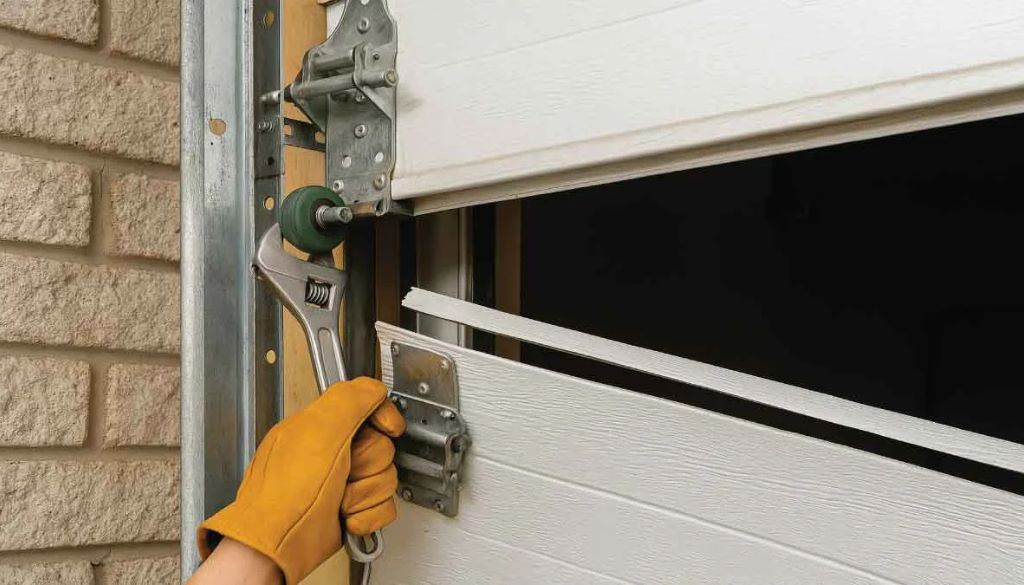
A bent or misaligned garage door track is one of the most common causes of a door that sticks, grinds, or refuses to open properly. The good news? Minor track issues are often something handy homeowners can tackle themselves — as long as you understand the limits of DIY and know when it’s time to pick up the phone and call an expert like Hitting the button on your remote only to have your garage door protest with a grumble and shake can be as annoying as a fly at a barbie. If you find yourself standing in your driveway on the Sunshine Coast, dealing with garage door track repair issues, you’re not alone. A door that binds in the tracks can sometimes be traced back to a Sunshine Coast Garage Door Guysdamaged cable drum causing uneven garage door movement., so it’s worth having both the tracks and drums inspected together.
This guide walks you through how to diagnose a misaligned track, what tools you’ll need, and the exact steps to straighten it safely. We’ll also cover the warning signs that mean you should skip the DIY and get a qualified technician on the job.We all know the feeling of hoping it’s just a hiccup and not the day our garage door decides to chuck a wobbly.
Why Garage Door Track Alignment MattersOur city’s affection for everything from sleek roller doors to bespoke beauties means we’ve seen every type of track tantrum there is. Misaligned tracks might sound like tech-speak but trust us; they can throw off your whole routine faster than getting stuck behind a lorry on the Harbour Bridge during peak hour. Rollers that are too short for the track depth are a surprisingly common cause of rail deformation — if you’re dealing with a bent or worn track, our article on
whether you can swap rollers for shorter onesYour garage door can weigh anywhere from 40 kg to well over 100 kg. The tracks are the only thing guiding that weight safely up and down, day after day. When a track bends or shifts — even slightly — the rollers can bind, the opener strains under extra load, and eventually something gives. Springs snap. Cables fray. Rollers jump the track entirely. A track that has shifted out of position doesn’t just cause operational problems — it can also leave one side of the door sitting lower than the other, so be sure to read our guide on explains the sizing risks in detail.how to close an uneven gap under a garage door once your track is back in alignment.But fear not – help is at hand! You don’t need to cross your fingers or start drawing up plans for an old-school carport just yet. We’ve been digging deep into research and rolling up our sleeves with
hands-on experienceBeyond mechanical damage, a misaligned track is a safety hazard. A door that drops unexpectedly or jams open is a genuine risk to people, pets, and vehicles. Addressing track problems early is always the right call..
What Happens When Tracks Are Bent or MisalignedIn this article, we’ll guide you through sorting out these
stubborn track troubles-
or knowing when it’s time to ring up the experts. So take a breather—
- Noisy, grinding, or scraping operationhelpful insights are coming right up, ready to get that door running smoothly as silk once more. A misaligned or damaged track is often the first thing to check when a scraping sound develops — our step-by-step
- Jerky or uneven movement as the door opens or closesgarage door scraping noise troubleshooting guide walks through how to isolate whether the track is truly the source or whether another component is to blame.
- Rollers visibly jumping off the track Common Problems with Garage Door Tracks
- The opener motor running but the door barely moving
- The door stopping partway and refusing to continueMisalignment and Its Impact
Signs Your Garage Door Track Needs Straighteningmisalignment wreaks havoc
on a garage door’s operation. It can turn the simple task of opening and closing into a struggle, with theVisible Track Damagedoor refusing to glide smoothly
along its tracks.- Obvious bends, kinks, or dents in the metal trackImagine trying to move about your home, but each doorway is slightly askew—you’d feel frustrated, right? That’s exactly what happens with your garage; misaligned tracks put unnecessary stress on other parts
- Gaps forming between the roller wheels and the track channel of the system.
- Track brackets pulling away from the wall or ceilingConsider your safety as well; an off-balance door isn’t just annoying—it’s a potential hazard
- Warped or twisted sections, particularly near the bottom of the vertical run. If left unaddressed, this could lead to accidents or even compromise the security of your home.
Operational Symptomsregular inspections
and-
prompt repair work
- The door shudders or vibrates during movement. By keeping our eyes peeled for signs of trouble and acting quickly when we spot them, we maintain optimal function and safety
- Rollers bind or jump at the same spot every cycle for our entire garage door system.
- The door sits unevenly — one side lower than the other when closed The Consequences of Worn or Damaged Rollers
- Grinding sounds that weren’t present before Worn or damaged rollers on your
Common Causes of a Bent Garage Door Track.
Understanding what caused the damage helps you prevent it from happening again.Not only does this
create an annoying rattleImpact and Physical Damage, but it can also
cause further damage-
to other components of the door system.
- A vehicle or object striking the bottom of the door or the track itself Each time you press your garage door opener expecting seamless movement, compromised rollers may instead be
- Tools, bikes, or ladders knocking into the track inside the garagegrinding against the tracks , making noise and putting undue strain on the automatic opener’s motor.
Mechanical CausesThis escalated wear and tear not only robs your morning of peace but could pose
safety risks-
. Considering malfunctioning garage doors contribute to significant numbers of injuries every year,
- Worn or seized rollersensuring your rollers are in top condition — when rollers stop spinning, they drag and force the track to flex isn’t just about convenience—it’s about protecting yourself and loved ones from potential harm.
- Broken springs or frayed cablesIssues with Rusty or Bent Tracks — these cause the door to fall unevenly, bending the track under sudden load Rusty or bent tracks can seriously impact your garage door’s ability to open and close smoothly. These issues often stem from
- Loose hardwareenvironmental factors like moisture — brackets and bolts that work free over time allow the track to shift position, which leads to rust, or physical impacts that may cause bending.
Environmental Causes
We approach-
repairing bent garage door tracks
- Corrosion and rust weakening track metal over time by first lubricating all moving parts for optimal performance. Inspection of the tracks allows us to diagnose exactly where the bending has occurred, so we can straighten things out effectively.
- Seasonal expansion and contraction of metal componentsDamaged drum connections, snapped cables, or simply metal fatigue might have caused the bends or misalignment. Addressing these concerns not only restores functionality but also extends the life of your sectional garage doors, ensuring peace of mind with every use.
- Poor original installation — tracks not plumb or properly spacedIdentifying Broken Springs
Tools Needed to Straighten a Garage Door Trackbroken springs
often top the list. They’re vital components that lift and lower your heavy door with ease. Spotting a broken spring early can be tricky; it requires a keen eye during-
regular maintenance checks
- Adjustable wrench and socket set.
- Locking pliers or C-clamps (at least two)Look for signs like uneven lifting
- Rubber mallet or a door that suddenly feels heavier to lift – these are giveaways that shouldn’t be ignored.
- Standard pliers or vise gripsIf you’re unsure about what to look for, leave it to us, the experts in garage door repair. We know just how to spot those problematic springs before they cause more damage or lead to an unexpected breakdown.
- Flathead and Phillips screwdriversPrompt servicing by qualified technicians
- Spirit level is crucial, not only for efficiency but also for safety. Trust us to provide quality service and durable replacement parts
- Stiff wire brush for cleaning the track channel that will have your garage door back in optimal condition swiftly and safely.
- Safety gloves and eye protectionThe Process of Garage Door Track Repair – Garage Door Service
Step-by-Step: How to Straighten a Garage Door Track
Assessing the Damage⚠️ Important safety note:We begin the repair process by thoroughly inspecting your garage door tracks. This crucial step uncovers any hidden issues that may hinder the functionality of your door. For instance, we check for bend or rust which can often cause the door to get stuck or become noisy during operation. This guide is for minor bends and misalignment only. If you suspect broken springs or cables are involved, stop immediately and call a professional. Spring tension can cause serious injury.
Our team looks out forStep 1: Disconnect the Garage Door Openerdamaged rollers or misalignment
—common culprits behind a garage door that won’t open or close smoothly.Unplug the opener from the power outlet. Pull the red emergency release cordNext, we evaluate if hanging from the trolley to disconnect the door from the opener mechanism. This allows the door to be moved manually and prevents accidental activation during your repair.springs have become damaged
and require attention. Regular servicing is vital in catching these problems early on, saving you from future hassles and unexpected costs.Step 2: Secure the Door in Place
Count on us for anUse two C-clamps or locking pliers — one on each side — clamped onto the track just below the bottom rollers. This locks the door in position and prevents it from falling if anything shifts unexpectedly. Never work under an unsecured garage door.honest assessment
; our aim is to ensure safe operation and extend the lifespan of your automatic garage system with top-notch workmanship and lasting solutions. Get in touch for an urgent visit to assess any damage; rest assured, our experienced professionals will keep your residential sectional doors running without a hitch.Step 3: Inspect the Track and Identify the Bent Section
Measuring and Cutting the Replacement TrackRun your eyes along the full length of both tracks. Look for obvious bends, but also check for sections that have shifted inward or outward from their correct position. Hold a spirit level against the vertical section — it should be perfectly plumb.
Repairing a garage door track requires precision and expertise. Our team excels in measuring and cutting replacement tracks to ensure your garage door operates smoothly.Step 4: Loosen the Track Hardware
Using your wrench or socket set, loosen (but don’t fully remove) the bolts on the track brackets in and around the damaged section. You need just enough play in the brackets to allow the track to be repositioned.First, we examine the damaged garage door track thoroughly to determine the exact length of the new track needed. Precise measurement is crucial as it prevents the door from becoming misaligned after installation.
Step 5: Straighten the Bent SectionWe remove the damaged section carefully, making sure not to disturb other components of your garage door system.
Use a rubber mallet to gently tap the bent area back into shape. Work gradually — multiple lighter taps are better than one hard blow. For tighter bends, use pliers to carefully reshape the metal. Check alignment with your spirit level as you go. The vertical tracks should be perfectly plumb; the horizontal overhead tracks should angle very slightly downward toward the back of the garage — roughly 1/4 inch per foot.Utilising professional – grade tools
, we cut the replacement track accurately, following the measurements taken.Step 6: Tighten Hardware and Check Roller Seating
Our experts ensure that every cut aligns with the original track’s dimensions, maintaining the seamless operation of your door.Once the track looks correct, tighten all brackets firmly. Check that every roller is properly seated in the track channel with no gaps. If rollers are worn or damaged, now is the time to replace them — see our guide to garage door roller replacementTo prevent further issues, we meticulously deburr and smooth out any rough edges on the new track before installation. for help with this step.
Aligning the new track perfectly with your existing system is a step we perform with utmost attention to detail, guaranteeing smooth motion for your garage door opens and closes.Step 7: Test the Door Manually
Secure fixation of tracks is vital; thus, we tighten every bolt and adjust all necessary components for optimal performance.Remove the C-clamps. Manually lift the door to check it moves freely along the full travel path without catching or binding. If it moves smoothly, reattach the opener trolley and run a powered test cycle. Watch and listen for any remaining issues.
After fitting the replacement track, our specialists runCommon Mistakes to Avoidmultiple tests
to confirm that there are no obstructions or irregularities when your garage door moves along these tracks.- Using too much force: Garage door track is relatively thin steel — hammering aggressively will create new bends rather than fixing old ones.Installing the New Track
- Skipping the cleaning step: Dirt and debris packed into the track channel can mimic a Evaluate the areabent track to ensure no obstructions, like dirt or old hardware, are present before starting the installation.. Clean it out before assuming the metal is damaged. Measure the length of the old track
- Working without securing the door: as a guide for cutting your replacement piece to the right size. An unsecured door is a crush hazard. Always clamp it in place first. Carefully remove any damaged track sections
- Ignoring door balance after repair: with appropriate tools, avoiding damage to surrounding areas of the garage door system. Disconnect the opener and leave the door at mid-height — it should stay put. If it drifts, the springs need attention. Align the new track accurately
When to Call a Professional Instead
Securely fasten the track in placeSome track issues are beyond what should be attempted without professional equipment and training. using bolts or screws, ensuring it’s firmly attached to prevent future misalignments.
| DIY-Friendly to facilitate smooth movement and reduce wear. | Call a ProfessionalReconnect any cables or tension springs that were detached during removal of the old track; this step requires utmost caution due to high tension involved. |
|---|---|
| Minor bends or dents in vertical track | Testing the Roller Doors Post-RepairBroken torsion or extension springs | Testing the garage door post-repair is crucial to ensure everything operates smoothly. We always perform thorough checks to guarantee your door’s reliability and safety.
| Loose brackets or hardwareCarefully examine the tracks for any remaining dents or warping that might hinder the door’s movement. | Snapped or frayed lift cablesCheck the | alignment of the tracks
| Debris or dirt causing obstructionOperate the garage door multiple times to observe its motion and listen for any unusual noises indicating unresolved problems. | Severely warped or crushed track sectionsInspect the rollers, ensuring they glide effortlessly along the tracks without sticking or binding. |
| Slight misalignment after impactTest the | balance of the garage doorDoor remains unbalanced after repair attempt by lifting it halfway; it should stay in place without drifting up or down. |
| Rollers slightly out of track and functioning, so they detect obstacles and prevent the door from closing on objects. | Track damage on commercial or heavy doorsEnsure all | hardware, including bolts and brackets
If you’re in any doubt — or if you’ve attempted the repair and the door still isn’t moving smoothly — the team at Sunshine Coast Garage Door Guys can diagnose and fix the problem properly. With a 5.0 rating from dozens of Sunshine Coast customers, they do it once and do it right.
Deciphering the best approach between rolling up your sleeves or calling in the experts can be a pivotal decision; understanding garage door track repair is not always black and white.Preventing Garage Door Track DamageWe’ll guide you through recognising when a professional hand lends more than just convenience but essential safety, ensuring your garage door operates smoothly day after day. Track problems are one of the most frequent causes of repairs — our guide on
- <
iframe title="DIY Garage Door Maintenance | Save Your Money" width="1200" height="675" src="https://www.youtube.com/embed/BTqjoWyH1Js?feature=oembed" frameborder="0" allow="accelerometer; autoplay; clipboard-write; encrypted-media; gyroscope; picture-in-picture; web-share" allowfullscreen>
- Keep tracks clean and free of debris — also see Understanding the Complexity of Track Repairhow to lubricate your garage door for correct technique (tracks should not be lubricated — only rollers, hinges, and springs)Track repair might seem straightforward, but it’s a task teeming with intricacies. As homeowners, we’ve learned that issues such as misaligned tracks
- Check and tighten all bracket bolts at least once a year can stem from broken cables
- Replace worn rollers before they start forcing the track out of shape or decayed jambs
- Book an annual service with a qualified technician for a full mechanical check.
For Sunshine Coast homeowners, Sunshine Coast Garage Door Guys offer servicing across all suburbs. Call metal fatigue(07) 5451 8776, and correcting any bent track sections. It calls for a precise blend of skill and knowledge to restore your garage door to its smoothly gliding state. or get a free quote online.
We take pride in our ability to handle these complex repairs. Tackling the twists and turns of damaged tracks requires a keen eye for detail—whether it’sFrequently Asked Questionsadjusting tension on the springs
or realigning the entire system.Can you fix a bent garage door track yourself?
With our experience, we bring doors back to life without compromising their integrity or performance. Everyday garage door owners trust us to meticulously measure, cut, and install replacement tracks that stand up to daily use while maintaining safety at all times.Yes, for minor bends and slight misalignment, DIY repair is achievable with basic tools and careful technique. However, if the track is severely warped, if springs or cables are involved, or if the door remains unbalanced after your repair, you should call a professional.
Safety Considerations for DIY RepairsShould garage door tracks be lubricated?
Ensuring your safety is paramount when you decide to tackleNo — this is a common mistake. Tracks should be kept clean and dry. Lubricating the track itself attracts dirt and debris, causing the rollers to bind. Lubricate the rollers, hinges, torsion spring, and lift cables instead.garage door track repairs
on your own. Without the right tools or know-how, what starts as a straightforward task could quickly become hazardous. It’s best to proceed with caution.Are garage door tracks supposed to be level?
The tension inThe vertical tracks should be perfectly plumb (straight up and down). The horizontal overhead tracks should angle very slightly downward toward the back of the garage — typically about 1/4 inch per foot — so the door rests against the weather seal when closed under its own weight.garage door springs
is particularly dangerous and should only be handled with proper understanding and equipment. WearWhat causes a garage door to come off track?protective eyewear
, and sturdy gloves, and keep small children and pets away from the work area.The most common causes are: debris lodged in the track, a bent section forcing rollers out, worn or broken rollers, snapped cables causing the door to drop on one side, and vehicle impacts. For a broader overview, see our post on common garage door problems and fixesWe must also stress that .regular inspections
can catch issues before they escalate into bigger problems. If you notice your garage door won’t open smoothly or has become misaligned, it’s time to examine the tracks for signs of damage or wear.How much does garage door track repair cost?
Use safe methods to repairA minor DIY track straightening costs very little beyond your time. Professional repair for a single bent track section typically involves a service call fee plus labour — exact costs depend on the severity of damage and whether additional parts like rollers or brackets need replacing. Contact Sunshine Coast Garage Door Guys for an obligation-free quote.bent tracks
using appropriate tools like a claw hammer; however, if the job seems overwhelming or beyond your skill level, consider seeking professional door services online today for expert help instead of risking injury or further damaging your garage system.📞 Need Help With Your Garage Door Track? If your repair hasn’t solved the problem — or if you’d prefer to leave it to the experts — the team at Sunshine Coast Garage Door Guys covers all Sunshine Coast suburbs with same-day service. Call The Benefits of Professional Track Repair Services(07) 5451 8776 or visit Dealing with a problematic garage door track can be tough. We know how vital a smoothly running garage door is to your daily routine, and that’s why we stand by the advantages of having professionals handle your track repair needs.sunshinecoastgaragedoorrepairs.com.au for a free quote. Do it once, do it right.
Expert Assessment