
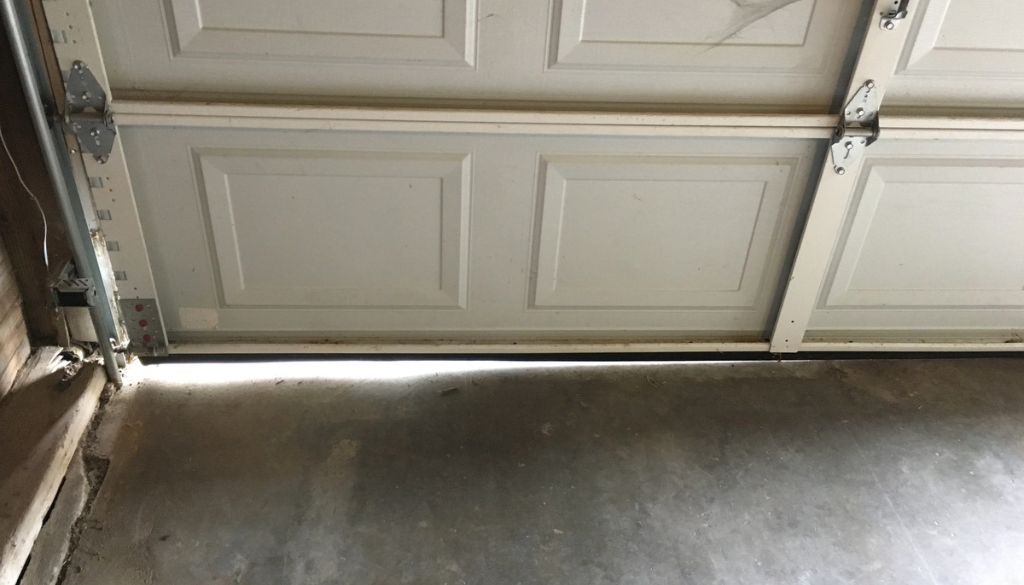
An uneven gap under your garage door is more than a cosmetic issue. Left unsealed, it becomes an open invitation for rodents, insects, water, and drafts to enter your garage. In Queensland’s humid coastal climate, even a small gap can accelerate rust, mould, and moisture damage to everything stored inside. Once the gap is fixed, it’s worth going a step further — our up and over door weatherstripping and insulation guide explains how to seal every edge properly so air, water, and pests stay out for good.
This guide walks you through the most common causes of uneven gaps, how to diagnose the problem, and the best fixes — from simple DIY seal replacements to situations where it’s smarter to call in a professional.
Why There Is an Uneven Gap Under Your Garage Door
Your garage door is designed to sit flush against the floor when fully closed. The bottom seal — usually a rubber or vinyl strip — creates a tight barrier against weather, pests, and debris. When a gap appears along one side or across the entire bottom, it means something has shifted, worn out, or is out of alignment.
Common problems caused by even a small uneven gap include:
- Rainwater pooling inside the garage
- Pests such as rats, spiders, and cockroaches gaining entry
- Energy loss from air-conditioned or heated spaces
- Dust and leaves constantly accumulating inside
- Accelerated corrosion on tools and stored items in coastal environments

Common Causes of Uneven Gaps Under Garage Doors
Identifying the root cause is the most important step. Apply the wrong fix and the problem will return within weeks.
1. Misaligned Garage Door Tracks
The vertical and horizontal tracks guide your door through its opening and closing cycle. Over time, vibration from daily use can loosen the mounting brackets, causing a track to shift slightly out of position. Even a few millimetres of track misalignment is enough to cause one side of the door to sit lower than the other, creating a visible gap on one side only.
Warning signs: The door scrapes or grinds on one side, it looks visibly tilted, or it hesitates mid-travel.
2. Worn or Damaged Weatherstripping
The rubber bottom seal takes a beating every day — compressed each time the door closes, baked by Queensland sun, and exposed to moisture. Over time, it cracks, hardens, or tears. A worn seal may no longer be flexible enough to conform to minor floor irregularities, leaving gaps even on a well-aligned door.
Warning signs: The seal looks cracked, flattened, or has chunks missing.
3. Foundation Movement or Uneven Garage Floor
Soil movement and settling is common throughout the Sunshine Coast region, particularly in areas with reactive clay soils. As the ground shifts, your concrete slab can develop a slight slope or low point. This means the door may seal perfectly on one side but leave a gap of 10–20mm on the other.
Warning signs: You can see light under the door from inside the garage; the gap is larger on one end than the other.
4. Worn or Broken Door Components
Springs, cables, and rollers are all load-bearing components that wear unevenly. If a spring loses tension on one side, or if a roller wears down, one side of the door will sit lower than the other when closed — causing an uneven gap even if the tracks are perfectly aligned.
Warning signs: Loud banging or squeaking when operating, the door feels heavier on one side, or it moves jerkily.
How to Check If Your Garage Door Is Uneven
Before reaching for the toolbox, take five minutes to properly diagnose the issue.
- Visual inspection: Stand inside the closed garage in a darkened space and look for lines of light under the door. A uniform thin line is normal; a wide gap on one end indicates misalignment or an uneven floor.
- Measure the gap: Use a ruler or tape measure at each corner and the centre. If measurements differ by more than 10mm, the problem is likely structural or mechanical.
- Inspect the seal: Run your hand along the bottom seal. If it feels brittle, cracked, or unevenly compressed, seal replacement is the first step.
Performing a Balance Test
A garage door balance test reveals spring and cable issues before they become dangerous:
- Disconnect the opener using the red emergency release cord.
- Manually lift the door to waist height (approximately 1 metre).
- Release the door gently and step back.
- A balanced door should remain stationary or drift only slightly. If it drops or rises sharply, the springs are misadjusted — this is a job for a professional.
DIY Ways to Close the Gap Under a Garage Door
For minor gaps caused by worn seals or minor track drift, the following fixes are well within the ability of most homeowners with basic tools.
Replace the Bottom Seal
This is the most common and cost-effective fix. A new flexible rubber or brush seal can close gaps of up to 20–25mm and will conform to minor floor imperfections.
- Purchase a replacement seal from a hardware store or garage door supplier — measure the door width first.
- For rough or uneven concrete floors, a T-style brush seal outperforms standard rubber seals, as the bristles conform to the surface rather than trying to compress against it.
- Slide the new seal into the aluminium retainer at the bottom of the door, or use contact adhesive if the retainer is missing.
- Test the door by closing it fully and checking for light underneath.
Realign Garage Door Tracks
If the gap is wider on one side, a slightly out-of-plumb vertical track may be the cause. This is a careful job but manageable for a confident DIYer:
- Loosen (don’t remove) the track mounting bolts using a spanner.
- Tap the track gently with a rubber mallet to shift it into alignment — use a level on the track face to confirm.
- Re-tighten the bolts firmly and test the door through several open/close cycles.
Caution: Only adjust the vertical track sections. Never attempt to bend or adjust horizontal overhead tracks — this requires professional tools and expertise.
Lubricate Moving Parts
Stiff or corroded rollers can cause uneven door movement that creates an intermittent bottom gap. A quick lubrication service can resolve this:
- Use a lithium-based garage door lubricant (not WD-40, which attracts dust).
- Apply to rollers, hinges, and the spring coils.
- Wipe away excess and run the door through 3–4 cycles.
Sealing Solutions at a Glance
| Solution | Best For | DIY Level | Cost |
|---|---|---|---|
| Bottom Rubber Seal | Minor unevenness, standard floors | Easy DIY | Low |
| Brush Seal | Uneven/rough floors, debris | Easy DIY | Low–Medium |
| Threshold Seal | Sloped/severely uneven floors, flooding risk | Moderate DIY | Medium |
| Track Realignment | Misaligned tracks causing one-sided gap | Moderate DIY | Low |
| Professional Repair | Springs, cables, foundation issues | Professional only | Varies |
Solutions for Severe Floor Unevenness
When the floor itself is significantly sloped or has settled, standard seal replacement may not be enough.

Installing a Threshold Seal
A threshold seal is a raised rubber or PVC strip that is glued or screwed directly to the concrete floor across the garage entrance. Rather than relying on the door seal to conform to the floor, the threshold creates a level barrier that the door closes against.
- Effective for gaps caused by floor slopes of up to 30mm
- Excellent at preventing water ingress during Queensland storm events
- Can be installed without any modifications to the door itself
Threshold seals are available at most hardware stores and can typically be installed in under an hour with a tube of construction adhesive and a mallet.
When to Call a Professional
Some situations are beyond DIY. Contact a qualified garage door technician if:
- The door drops suddenly when released during a balance test — a broken spring is dangerous and must not be adjusted by untrained individuals.
- A cable is frayed, kinked, or off the drum — cables are under extreme tension and can cause serious injury.
- The gap is caused by foundation cracking — significant floor settlement may require a structural engineer’s assessment.
- The door itself is bent or warped — panel replacement is required.
- You are not confident working with mechanical components under tension.
Need help from a local expert? The team at Sunshine Coast Garage Door Guys services all Sunshine Coast suburbs. For a fast, honest assessment of your garage door gap — whether it needs a new seal or a full mechanical inspection — call us on (07) 5451 8776 or request a free quote online. We do it once, do it right.
How Much Gap Is Normal Under a Garage Door?
A small amount of clearance is normal and expected — most residential garage doors are designed with a 6–12mm gap between the door bottom and the floor to allow the seal to compress properly. This clearance ensures the door doesn’t drag on the concrete, which would wear out both the door bottom and the floor.
Anything above 12mm is worth investigating, particularly if the gap is uneven from one side to the other. In coastal Queensland, even a 15mm gap can allow sufficient moisture ingress to cause significant corrosion over a single wet season.
Preventing Future Gaps
A basic annual maintenance schedule will catch most of these issues before they become gaps:
- Inspect the bottom seal each spring and autumn — replace at the first sign of cracking or hardening.
- Check track brackets for loose bolts every 12 months; tighten as needed.
- Lubricate all moving parts (rollers, hinges, springs) every 6 months.
- After major storms, inspect the floor and track alignment for any movement.
- Book a professional service every 2–3 years for a full mechanical check, including spring tension testing.
Frequently Asked Questions
Why does my garage door have a gap on one side?
A gap on one side only usually points to a track alignment issue, an uneven floor, or imbalanced springs. Start with a visual track inspection — if both sides look plumb and aligned, perform a balance test to check the springs.
Can uneven garage floors cause gaps under the door?
Yes. If the concrete slab has settled or developed a slope, the door bottom seal may seal perfectly on the high side and leave a gap on the low side. A threshold seal is the most effective fix in this situation, as it compensates for the floor rather than the door.
What is the best seal for an uneven garage door gap?
For most uneven floors, a T-style brush seal provides the best coverage. The bristles flex and conform to the surface contours, unlike rigid rubber seals that can bridge across irregularities and leave gaps. For significant slopes over 20mm, combine a brush seal with a threshold seal for full protection.
Is it safe to adjust garage door tracks yourself?
Adjusting the vertical track sections — loosening brackets and tapping the track into alignment — is generally safe for a competent DIYer with the right tools. Never attempt to adjust the overhead horizontal tracks or the spring system without professional training. Garage door springs are under extreme tension and can cause serious injury if released incorrectly.
Can worn springs cause an uneven door?
Yes. If one spring loses tension while the other remains strong, the door will lift unevenly — sitting lower on the weaker side when closed. This is one of the most common causes of an uneven gap that cannot be fixed by seal replacement alone. Spring replacement should always be carried out by a qualified technician.
Ready to fix that gap? Whether you need a quick seal replacement or a full garage door service, Sunshine Coast Garage Door Guys has qualified local technicians ready to help across all Sunshine Coast suburbs. Call (07) 5451 8776 or book your free inspection today.
