
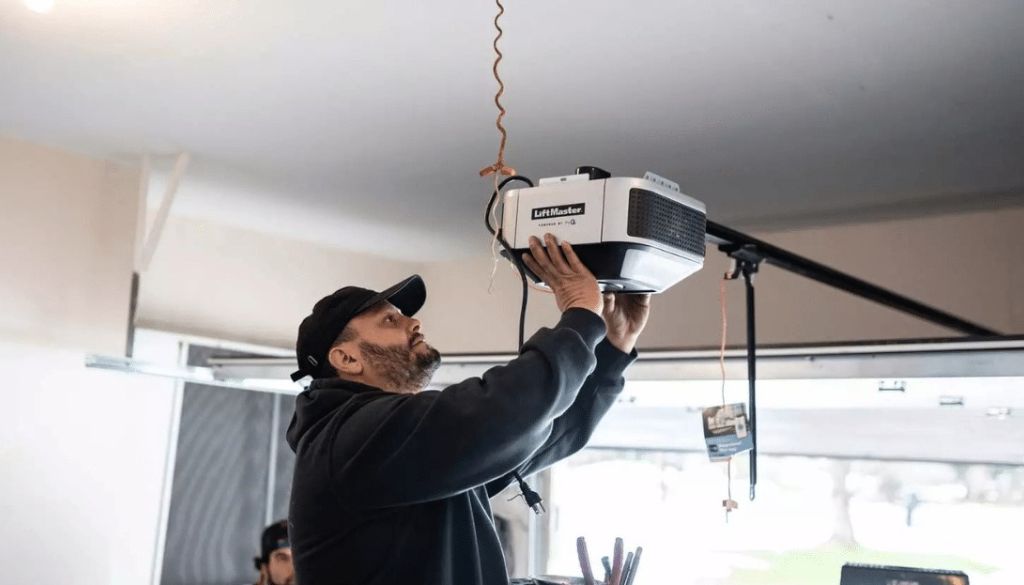
Your garage door opener is one of the hardest-working pieces of equipment in your home, cycling open and closed several times a day, year after year. Like anything mechanical, it eventually wears out — and most homeowners barely give it a thought until the day it refuses to budge.
The tricky part is knowing whether you’re looking at a quick repair or a motor that’s genuinely reached the end of its life. Replace it too early and you’ve spent money needlessly; leave it too long and you risk being locked out, locked in, or facing a failure at the worst possible moment — usually when you’re already running late.
Below you’ll find the clearest garage door motor replacement signs to watch for, what’s actually causing them, and how to weigh up repair against replacement, so you can make the call with confidence well before a complete breakdown forces your hand. Many of these warning signs appear naturally as a motor nears the end of its expected garage door opener lifespan, so knowing that timeline helps you tell normal wear from genuine failure.
What Are the Signs a Garage Door Motor Needs Replacing?
Unusual noises during operation
A healthy opener runs with a steady, predictable hum. When you start hearing grinding, squealing, rattling or straining, the motor is usually telling you something. Grinding often points to worn drive gears, while a loud hum with little or no movement can mean the motor is struggling to turn the door. It’s worth noting that not every noise is the motor itself — a harsh metal scraping noise frequently comes from the rollers or tracks rather than the opener, which is exactly why a proper diagnosis matters before you spend a cent.
Slow opening and closing performance
If your door has become sluggish — hesitating before it moves, or crawling up and down where it once ran smoothly — the motor may be fatiguing. A slow, laboured opener that’s pushing 10 years or more is often on borrowed time, particularly if the pace has dropped noticeably over a short period.
Inconsistent or unreliable operation
A motor that works perfectly one moment and refuses the next is one of the most frustrating faults — and one of the most telling. Intermittent operation, random stopping mid-travel, or a motor that overheats and cuts out after a few cycles usually signals failing internal components. Once an opener becomes unpredictable, its reliability rarely returns on its own. Not every unresponsive door means a failing motor, so it pays to understand why your garage door remote has stopped working before you budget for a replacement.
Common Technology and Connectivity Problems
Remote control connectivity issues
If the wall button works but the remote doesn’t, you’re likely looking at a remote or receiver problem rather than a dying motor. But when reprogramming, fresh batteries and a new remote all fail to restore reliable operation, an aging receiver built into an older opener can be the culprit — and on obsolete units, that often isn’t worth repairing.
Constant automation troubleshooting
An opener that needs regular resetting, frequent sensor realignment, or endless fiddling to behave is quietly costing you time and patience. When troubleshooting becomes a weekly ritual, replacement usually delivers better value than chasing one fault after another.
Lack of smart features and modern technology
Not every replacement sign is a fault. If your opener can’t connect to your phone, offers no battery backup, and lacks the safety and convenience features that come standard today, an upgrade may simply make sense — especially for busy Sunshine Coast households wanting to open the door remotely or check it’s closed from anywhere. Recurring fault codes are a signal worth watching, and our guide to common causes of an opener light flashing helps separate a sensor problem from a genuine motor fault.
How Age Impacts Garage Door Motor Performance
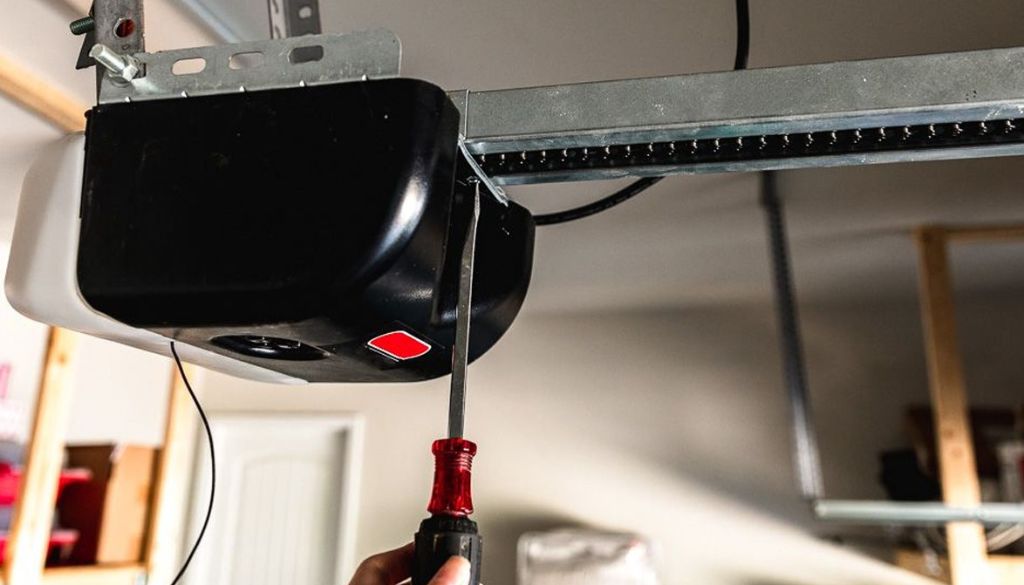
Most garage door motors last around 10 to 15 years with regular servicing. Past that point, components wear, performance declines, and breakdowns become more frequent. An older motor also tends to be less efficient and noisier than a modern unit, and replacement parts for discontinued models can be hard to source.
The real tipping point is cost. A single repair on a 12-year-old opener might be reasonable, but when repairs start stacking up, the maths shifts. If you’re spending repeatedly on a unit that’s near the end of its expected life, putting that money toward a new opener is usually the smarter long-term decision. Our guide to opener repair can help you judge whether a fault is a one-off fix or part of a bigger pattern.
What Causes Garage Door Motors to Fail?
Understanding the root causes helps you spot trouble early. The most common include motor overheating from overuse or a door that’s become too heavy to lift easily; worn gears and drive components after years of cycling; electrical faults, often triggered by storms and power surges, which the Sunshine Coast sees its share of; and excessive door weight caused by failing springs forcing the motor to work far harder than it should. That last point is key — a struggling motor is frequently the victim of a mechanical problem in the door itself, not the original fault.
Safety Risks of Delaying Replacement
Pushing an aging motor past its limits carries real risks. The obvious one is failure during daily use — a door stuck open leaves your home exposed, while a door stuck closed can trap your car inside when you least need it. Less obvious is what older openers lack: many pre-date modern auto-reverse sensitivity and battery backup, and may not meet current safety expectations. A door that doesn’t reliably reverse on an obstruction is a genuine hazard, particularly in homes with children or pets. If you’ve noticed your door behaving unpredictably, don’t ignore it — these are the same warning signs of a failing garage door that tend to precede a bigger problem.
Should You Repair or Replace Your Garage Door Motor?
When repair makes sense. If your opener is under roughly 10 years old, the fault is a single component (a gear set, capacitor or sensor), and it’s otherwise running well, repair is almost always the cost-effective choice.
When replacement is the better investment. Aging motors with repeated breakdowns, obsolete units with no available parts, or a motor that’s burnt out are better replaced. Proactively replacing a unit that’s clearly on its way out also spares you the inconvenience of an unexpected failure.
Professional inspection. The surest way to know is to have a technician assess it. A proper inspection distinguishes a motor problem from a spring, track or sensor issue — faults that can mimic motor failure but cost far less to fix.

Benefits of Replacing an Old Garage Door Motor
A modern opener brings noticeably smoother, more reliable operation and far quieter running — a real benefit if your garage sits beneath a bedroom. Newer motors are more energy-efficient, and the convenience features are a genuine step up: smartphone control, remote monitoring, motion-activated lighting and battery backup that keeps the door working through a blackout. If you’re weighing up a new unit, our garage door opener replacement options cover the choices worth considering.
Choosing the Right Replacement Motor
When it’s time to upgrade, three things matter most: power and compatibility (the motor must be rated for your door’s size and weight), noise (belt-drive openers run significantly quieter than older chain-drive units), and features such as battery backup, smart controls and safety sensors. Pairing replacement with a garage door maintenance and servicing routine from day one is the simplest way to get the longest possible life from your new opener.
Frequently Asked Questions
How do I know if my garage door motor needs replacing?
Persistent noises, slow or unreliable operation, frequent repairs, and an age beyond 10–15 years are the strongest signs. A technician can confirm whether it’s the motor or another component.
How long does a garage door motor last?
Typically 10 to 15 years with regular servicing, less in high-use households.
Can I replace the motor without replacing the garage door?
Yes. The opener and the door are separate — a new motor can be fitted to an existing door in good condition.
Is it better to repair or replace an old garage door opener?
Repair makes sense for newer units with a single fault; replacement is better value for aging, obsolete or repeatedly failing motors.
What are the benefits of upgrading?
Quieter, smoother operation, better energy efficiency, and modern safety and smart features like battery backup and smartphone control.
Not sure if it’s time to replace your motor?
You don’t have to guess. The team at Sunshine Coast Garage Door Guys will take a proper look, tell you honestly whether you’re facing a simple repair or a motor that’s genuinely on its way out, and lay out your options clearly so you can decide what’s right for your home and budget — no pressure, no upselling. It’s the do it once, do it right approach our customers keep coming back for.
Our qualified technicians service every major brand, including Eco, Centurion and Gliderol, and back their work with a workmanship guarantee. With a 5.0-star reputation built across the Sunshine Coast — from Buderim and Caloundra through to Maroochydore, Mooloolaba, Noosa and everywhere in between — you can trust the job will be done properly the first time. Whether your opener is grinding, slowing down, playing up intermittently, or simply showing its age, the sooner it’s assessed the more choice you have and the less chance of being caught out by a sudden failure.
Call (07) 5451 8776 today for a free, no-obligation quote, or to book an inspection at a time that suits you. You can also reach us through our online contact form, and we’ll get straight back to you. Sunshine Coast Garage Door Guys — Unit 104/25 Chancellor Village Blvd, Sippy Downs QLD 4556 — your local garage door specialists for repairs, replacements, servicing and new opener installations right across the region.
