
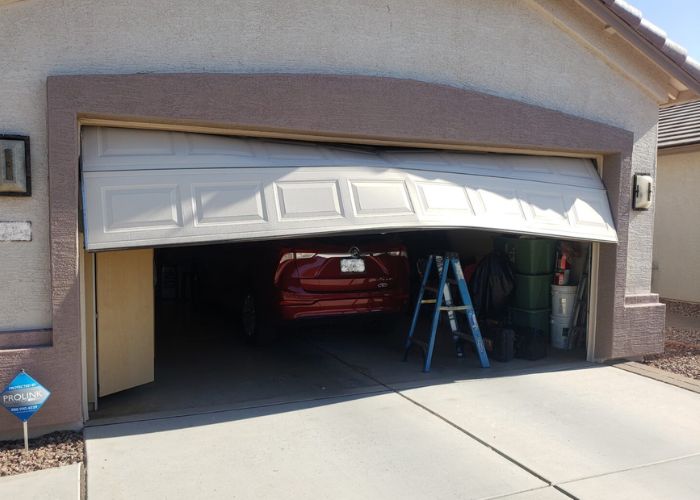
Most homeowners don’t think about their garage door until something goes wrong. But when something does go wrong — a loud bang, a door that suddenly drops, or a panel that buckles — the question that follows is almost always the same: did this come out of nowhere?
The short answer is no. Garage doors almost never collapse without warning. What feels like a sudden failure is usually the result of weeks or months of gradual wear that went unnoticed or ignored. Understanding what those early warning signs look like is the difference between a simple service call and an expensive, potentially dangerous emergency. A motor that grinds, overheats, or struggles to lift the door is one of the early warning signs of motor failure you should never ignore alongside structural red flags.
This guide covers the real causes of garage door collapse, the warning signs most homeowners miss, and what you can do right now to keep your door — and your household — safe.
Do Garage Doors Really Collapse Suddenly?
Genuine no-warning collapses are rare. Garage doors are heavy, mechanical systems made up of springs, cables, rollers, tracks, and panels — all of which wear gradually over time. Before any of those components reach the point of failure, they almost always show signs of stress.
The reason a collapse can feel sudden is that the early signs are easy to dismiss. A little extra noise during operation, a slightly slower response from the opener, or a door that doesn’t quite sit level — these things tend to get written off as minor quirks. By the time the door fails completely, the root problem has usually been developing for a long time.
There is one exception worth noting: springs and cables under high tension can snap with very little external warning. Even then, these components typically show wear patterns — rust, fraying, visible elongation — before they give way. Regular inspection is what catches them in time. One of the clearest red flags is a crooked garage door that catches on one side, which usually means a cable, spring or track has already failed.
Common Warning Signs Before a Garage Door Fails
Recognising early red flags is how you turn a potential collapse into a straightforward repair. Small mechanical issues don’t stay small — they place added stress on every connected component until something gives.
Unusual Noises During Operation
Grinding, squealing, rattling, or banging during normal operation are some of the clearest early indicators of a problem. Grinding often points to worn rollers or dry metal-on-metal contact. Squealing can signal hinges that need lubrication or tracks that are misaligned. Rattling may mean loose hardware — bolts, brackets, or panels — that are working their way free under the vibration of daily use.
None of these sounds should be treated as background noise. Each one is the door communicating that something needs attention.
Slow or Delayed Movement
If your door is taking noticeably longer to open or close than it used to, the cause is worth investigating. A sluggish door can point to a failing motor, springs that have lost tension, or a general imbalance in the system. Left unaddressed, the extra load placed on the opener and hardware accelerates wear across the board and moves the system closer to failure.
Jerky or Uneven Motion
A door that shudders, wobbles, or moves in irregular bursts rather than a smooth, controlled motion is a door under mechanical stress. Misaligned tracks are a common cause — when the rollers can’t travel cleanly through the track, the door fights every inch of its movement. Uneven cable or spring tension can produce the same effect. The more the door has to work against itself, the faster its components degrade.
Door Sitting Uneven or Not Closing Properly
If your door doesn’t hang level when it’s closed, or if there are visible gaps along the bottom or sides, that’s a structural signal worth taking seriously. Broken or stretched cables and faulty springs are the most common culprits. Beyond the obvious security concern of a door that won’t seal properly, this kind of imbalance puts uneven load on the entire system and accelerates the risk of a more serious failure.
Sagging or Bent Sections
Visible bowing, denting, or structural weakness in one or more panels is a warning that the door’s load-bearing integrity has been compromised. This can develop from repeated impact, moisture damage, prolonged UV exposure, or simply the age of the material. A structurally compromised panel can put the tracks and rollers under abnormal stress, raising the risk of the door jumping its tracks entirely.

What Actually Causes a Garage Door to Collapse?
Broken Springs or Snapped Cables
Torsion and extension springs carry the full counterbalanced weight of the door. Cables transfer that tension into controlled movement. When either fails under load — whether from fatigue, rust, or improper installation — the door can drop rapidly and without control. This is the most dangerous failure mode, and the reason spring and cable work should always be left to a licensed technician.
Door Going Off Its Tracks
A door that leaves its tracks is an immediate safety hazard. This can happen as a result of impact damage, gradual misalignment of the track itself, or rollers that have worn down to the point where they can no longer grip properly. Once a door is off its tracks, it has no controlled path of movement and can fall at any angle.
Structural Weakness or Damage
Dented panels, warped sections, and aging materials all reduce the door’s ability to distribute load evenly. Environmental factors — particularly Queensland’s humidity, heat, and seasonal storms — can accelerate deterioration in timber, steel, and aluminium doors alike. A structurally weakened door is a door that’s working against itself every time it moves.
Lack of Maintenance
Dry hinges, worn rollers, loose bolts, and unlubricated tracks create friction and resistance that gradually wear down every component they contact. Most preventable failures trace back to maintenance that wasn’t done — not because it was difficult, but because the early signs weren’t taken seriously.
Situations Where a Garage Door May Seem to Collapse “Without Warning”
Ignored Early Warning Signs
The most common scenario is simply this: the signs were there, but they were overlooked. A noisy door becomes a noisier door, then a slow door, then a door that won’t close properly — until one day it doesn’t operate at all, or worse, drops without control. The failure feels sudden because no single moment looked like a crisis until the last one.
Hidden Internal Damage
Some wear happens out of sight. Cable fraying inside a drum, internal corrosion on a spring coil, or gradual fatigue in a hinge barrel won’t always be visible during a casual look at the door. This is where scheduled professional inspections add real value — a trained technician knows where to look and what to look for.
Sudden Spring or Cable Snap
High-tension components can reach their failure point and give way with a sharp crack and a rapid drop. Even though the failure itself takes a fraction of a second, the conditions that led to it built up over time. Homeowners often describe this as completely unexpected — but inspection of the failed component almost always reveals pre-existing wear.
How to Prevent a Garage Door from Collapsing
Regular Inspections
A monthly visual check of your springs, cables, rollers, and tracks can catch issues before they become failures. Look for rust, fraying, uneven wear, or anything that looks different from last time. Don’t forget to check whether the door hangs level when closed and whether it reverses properly when it meets resistance.
Lubrication and Maintenance
Moving parts need lubrication to function correctly and to last. Hinges, rollers, and the torsion spring (not the tracks themselves) should be treated with a suitable garage door lubricant every few months. This reduces friction, noise, and mechanical stress across the system, and it’s one of the simplest things you can do to extend the life of your door.
Professional Servicing
An annual inspection by a qualified technician goes beyond what a visual check can achieve. A professional can assess spring tension, check cable integrity, test opener safety features, and identify hidden wear before it becomes a problem. For high-use doors or older systems, more frequent servicing may be appropriate.

What to Do If You Suspect Your Garage Door Is Unsafe
Stop Using the Door
If your door is showing signs of structural failure — visible damage, unusual movement, or a sudden change in how it operates — stop using it immediately. Operating an unstable door increases the risk of injury and can accelerate damage to surrounding components.
Call a Professional Technician
This is not a situation for DIY investigation, particularly where springs or cables are involved. High-tension components require specialist tools and training to handle safely. Contact a qualified technician to assess the door before attempting any further operation.
The team at Sunshine Coast Garage Door Guys provides safety inspections and emergency repairs across the Sunshine Coast region. If your door is showing any of the signs covered in this guide, call (07) 5451 8776 or get in touch via sunshinecoastgaragedoorrepairs.com.au to arrange an inspection.
What Happens If You Ignore the Warning Signs?
Ignoring the early signs of garage door failure doesn’t make the problem go away — it gives it time to get worse. A worn spring that costs a straightforward repair today can become a snapped spring that damages cables, panels, and the opener tomorrow. Beyond the financial cost, there’s a real safety risk to anyone near the door when it finally gives way. Acting on small signs while they’re still small is always the better outcome.
Frequently Asked Questions
Can a garage door suddenly fall?
In rare cases, yes — most commonly when a spring or cable snaps under tension. However, these failures almost always follow a period of visible wear. Regular inspection significantly reduces this risk.
What causes a garage door to collapse?
The most common causes are broken torsion springs, snapped cables, doors that have left their tracks, or panels that have been structurally weakened by damage or age.
Is a noisy garage door dangerous?
Not necessarily dangerous on its own, but persistent unusual noise is a warning sign that something in the system needs attention. Ignoring it typically leads to more serious problems.
How do I know if my garage door is unsafe?
Look for uneven hanging, unusual sounds, slow or jerky movement, visible damage to panels or hardware, or any sudden change in how the door operates. When in doubt, have it inspected.
What should I do if a spring breaks?
Stop using the door immediately and call a licensed technician. Do not attempt to repair or replace a torsion spring yourself — these components are under extreme tension and require specialist handling.
