
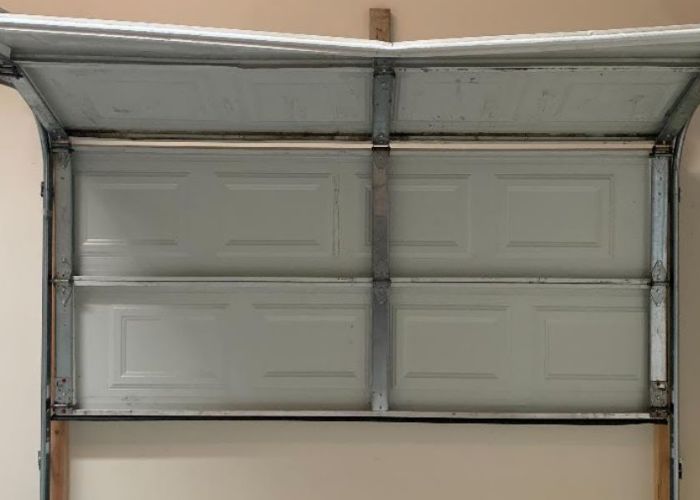
That uneven, tilted look isn’t just an eyesore. When a garage door panel sags on one side, it’s almost always a signal that something deeper in the system is under stress — and leaving it alone tends to make things worse, not better.
This guide walks through the most common causes of one-sided sagging, how to spot the early warning signs, and what you can realistically fix yourself versus what needs a qualified technician.
What It Means When a Garage Door Panel Sags on One Side
Not all garage door sagging is the same. A door that’s dropping evenly across its full width has a different problem to one that tilts, bows, or pulls noticeably toward a single side.
One-sided sagging usually points to unequal weight distribution — somewhere in the system, one side is carrying more load than the other. That imbalance puts strain on every connected component: the opener, the cables, the tracks, and the hardware holding it all together.
The tricky part is that sagging is rarely caused by a single isolated fault. By the time a panel visibly droops, you’re usually looking at a combination of wear across multiple components. That’s why addressing the symptom without diagnosing the root cause tends to lead to repeat problems. Sagging panels are closely related to an uneven or jammed garage door, because a distorted panel pushes one side of the door out of alignment with its track.
Sagging vs. Gaps vs. Uneven Doors
These terms often get used interchangeably, but they describe slightly different things. A sagging panel bows or bends under its own weight. A gap on one side means the door isn’t sealing flush against the frame or floor. An uneven door means one side travels higher or lower than the other during operation. In practice, these problems frequently overlap — a sagging panel creates gaps, and an uneven door accelerates panel wear.
Most Common Causes of a Garage Door Sagging on One Side
Understanding the mechanical causes helps you match the right fix to the right problem. Here are the most frequent culprits.
Spring Imbalance or a Broken Torsion Spring
Torsion springs are the primary mechanism keeping your door balanced. They store energy as the door closes and release it to assist the lift. When one spring loses tension or breaks entirely, the door loses its counterbalance on that side — and the panel droops. To understand exactly how this system works and why tension calibration matters, our guide to how garage door torsion springs work covers the mechanics in detail.
A broken torsion spring is not a repair to attempt yourself. The stored energy in these components is significant enough to cause serious injury if mishandled. For a full breakdown of the safety risks involved, read our article on whether a broken garage door spring is safe to use before going near the hardware.
Worn or Stretched Cables
Lift cables run from the bottom corners of the door up to the drums sitting above. If a cable on one side frays, stretches unevenly, or slips off its drum, that side of the door drops. The sagging you see in the panel is often the first visible symptom of cable wear that’s been progressing for some time. Our garage door cable repair guide explains how cable failure progresses and what options exist for repair.
Misaligned or Damaged Tracks
The tracks guide the door rollers from the closed position up to the ceiling. If a track section has shifted, bent, or pulled away from its mounting bracket — even slightly — the door can bind on one side during travel. That binding creates uneven loading on the panel, which over time causes visible sagging and bowing. A door that’s come off its tracks entirely is a related but more urgent situation covered in our guide to fixing a garage door that’s off track.
Weak or Warped Panels
Older steel panels corrode and lose structural integrity. Timber panels absorb moisture and warp, particularly on the Sunshine Coast where humidity is a genuine year-round factor. A panel that’s no longer rigid can sag under its own weight, especially across the wider spans of double doors. This is often visible as a bow in the middle of the panel rather than at the edges.
Missing or Undersized Struts
Struts are horizontal reinforcement bars that run across the back of door panels. They prevent flexing across the panel’s width, especially on wider doors. When a strut is missing, undersized, or has corroded away, the panel has no internal support — and it will eventually sag, particularly on the side closest to any weak point or fastener gap.
Poor Installation or Uneven Load Distribution
A door that was never properly balanced from the start will show signs of uneven wear earlier than it should. If your door is relatively new but already sagging on one side, improper initial installation is worth considering. Incorrect spring sizing, off-centre opener placement, or misaligned tracks from day one all create chronic stress on one side of the system.

Less Obvious Causes of One-Side Sagging
House Settling or Structural Shifts
The opening your garage door sits in is only as square as the frame around it. Over time, foundations settle, timber frames shift, and the opening that was perfectly aligned at installation can develop a tilt. When this happens, the door tries to travel in a path that no longer matches its tracks — and one side bears the brunt of that mismatch.
Sunshine Coast Weather and Environmental Exposure
Humidity, salt air, and seasonal temperature swings all take a toll on door materials and hardware. Metal components corrode, fasteners loosen, and panel materials expand and contract. A seasonal inspection checklist helps catch weather-related wear before it becomes a structural problem. On the Sunshine Coast specifically, coastal exposure accelerates this process compared to inland areas.
Opener Force and Single-Point Pulling
Most residential openers connect to the door at a single central point. If the door is already slightly unbalanced, the opener’s pulling force can amplify that imbalance rather than correct it — putting disproportionate stress on the top panel and one side of the system. Over time, this wears the panel and hardware unevenly.
Warning Signs Your Garage Door Is Sagging Unevenly
Catching the problem early keeps repair costs manageable. Watch for:
Visible gap on one side. If light or air is getting in along the side or bottom edge on one side only, the door is no longer sitting flush. Beyond the comfort issue, this is a security vulnerability.
Grinding, scraping, or uneven sounds during operation. Unusual noises point to components under stress. A door that makes different sounds on one side than the other is binding or dragging somewhere along that track.
One side travelling slower or lagging during opening. Stand back and watch the door open from a distance. If one side rises faster than the other, or the door tilts during travel, you have a balance or track issue that’s getting worse with every cycle.
The door won’t hold position at the halfway point. A balanced door should hold roughly level when stopped halfway during opening. If it drifts down on one side, the counterbalance isn’t working correctly.
How to Diagnose the Problem (DIY Checks)
There are a couple of safe checks homeowners can do before calling a technician.
The Balance Test
Disconnect your opener by pulling the manual release cord (usually a red handle). Lift the door by hand to about hip height and let go. A properly balanced door holds that position. If one side sinks, or the door drifts down entirely, the springs aren’t correctly counterbalancing the door’s weight. This is one of the basic checks covered in a full garage door inspection.
Visual Inspection
With the door closed, look along the top of the door from inside the garage. Check for:
- Any visible gap or tilt in the panel line
- Cables that appear slack, frayed, or sitting off their drums
- Track brackets that look bent, loose, or pulling away from the wall
- Rust or visible cracks on spring coils above the door
- Struts that look buckled, missing, or detached at one end
Do not touch springs or cables during this inspection. Visual assessment from a safe distance is appropriate; hands-on contact with tensioned components is not.
How to Fix a Garage Door Sagging on One Side
Minor Fixes Homeowners Can Try
A small number of issues are genuinely safe for a competent DIYer. Tightening loose bracket bolts with a socket wrench, lubricating rollers and hinges with a silicone-based spray, and replacing worn weatherstripping along the bottom are all reasonable starting points. These won’t fix a structural sag, but they eliminate minor contributors and make the door easier for a technician to assess.
Professional Repairs
Spring replacement, cable repair, and track realignment all require a licensed technician. These are not tasks where caution is optional — working with components under tension without the right tools and training creates real injury risk. A qualified technician will assess the full system, not just the visible symptom, and balance the door correctly before leaving.
When Replacement Is the Better Option
If the panel itself is severely warped, corroded through, or structurally compromised, repair may not be cost-effective. A technician can advise whether panel replacement, or full door replacement, makes more financial sense based on the door’s age, material condition, and the scope of hardware wear alongside it.

What Happens If You Ignore a Sagging Garage Door Panel?
A sagging panel that’s left alone doesn’t stabilise — it gets worse. The opener works harder to compensate for the imbalance, shortening its lifespan. Cables and tracks wear unevenly. The panel itself continues to distort. Eventually, the system reaches a point where a component fails without warning, which can mean a door dropping suddenly or refusing to open at all.
Beyond the inconvenience and repair cost, there’s a genuine safety risk. A door that fails under tension can cause serious injury.
Book a Professional Inspection on the Sunshine Coast
If your garage door panel is sagging on one side, the Sunshine Coast Garage Door Guys team can assess the full system and get it back in proper working order. We service all Sunshine Coast suburbs, including Sippy Downs, Buderim, and surrounding areas.
Call us on (07) 5451 8776 or send an enquiry via our website for a free quote.
Frequently Asked Questions
Why is my garage door uneven on one side?
The most common causes are spring imbalance, worn or stretched cables, misaligned tracks, and panel or strut failure. It’s rarely a single isolated issue — the system works as a whole, and imbalance usually affects multiple components over time.
Can I fix a sagging garage door myself?
Minor tasks like lubricating components, tightening brackets, and replacing weatherstripping are safe for most homeowners. Anything involving springs, cables, or track realignment should be handled by a qualified technician.
Is a sagging garage door dangerous?
Yes. A door that’s out of balance puts abnormal load on the opener, cables, and springs. If a component fails under that stress, the door can drop suddenly. This is a safety hazard that should be assessed promptly.
How much does it cost to fix a sagging garage door?
Cost depends on the root cause. Simple adjustments are inexpensive, while spring or cable replacement carries a higher labour and parts cost. The best approach is a professional assessment to identify exactly what needs attention before committing to a repair path.
Does a sagging door mean I need a full replacement?
Not necessarily. In many cases, component repair restores full function. If the panels themselves are structurally compromised or the door is at the end of its service life, replacement may be more cost-effective — but a technician can advise based on an actual inspection.
