
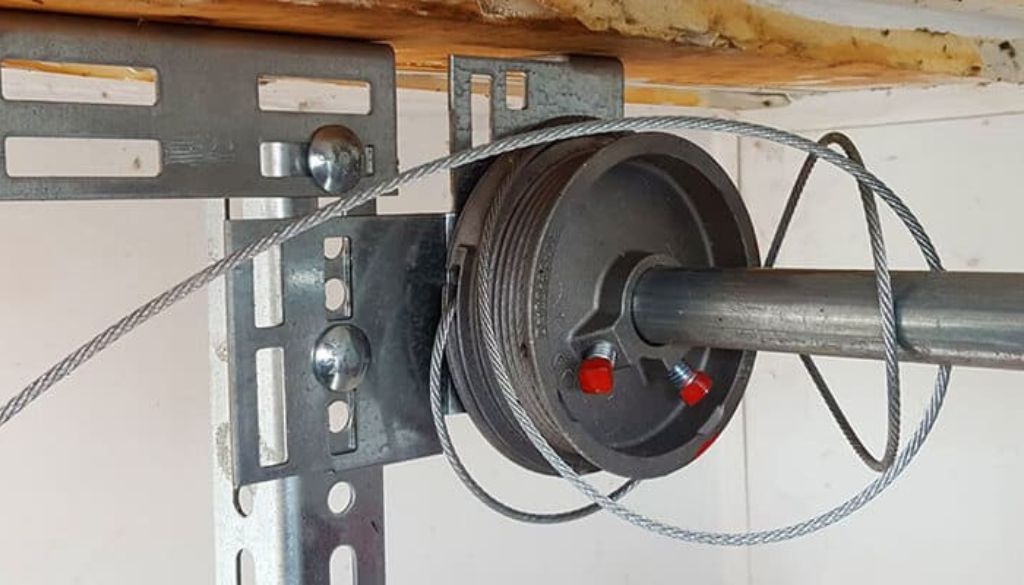
You pressed the button, heard a clunk, and now your garage door is hanging at an odd angle – or it simply won’t budge. A garage door cable that has slipped off the pulley is one of the most common mechanical faults homeowners face, and it can happen without warning. While the urge to grab a ladder and fix it yourself is understandable, the repair carries real risks that every DIYer needs to understand before touching a single bolt.
In this guide, we’ll explain how cables and pulleys work together, what causes cables to come off, walk you through the steps for a minor DIY fix, and – most importantly – tell you when to put the tools down and call a qualified technician.
How Garage Door Cables Work
Garage door cables are the steel wire ropes that act as the mechanical link between your door’s springs and its lifting system. There are two main configurations you’ll find on Australian homes:
- Torsion spring systems – A horizontal spring sits above the door. As it unwinds, it rotates a steel shaft with drum spools at each end. The cables wrap around those drums and attach to the bottom bracket of the door, lifting it evenly on both sides.
- Extension spring systems – Springs run along the horizontal tracks on either side. Cables thread through pulleys attached to the springs and the door’s bottom brackets, transferring the spring’s energy into lifting force.
- Safety cables – These thread through extension springs and anchor at each end. They don’t do the lifting; they contain a snapping spring so it doesn’t become a projectile.
Pulleys are small wheel-and-axle components mounted at fixed points along the door frame or spring hardware. They redirect cable tension and keep everything moving in the right plane. When a cable slips out of its pulley groove or unwraps from its drum, the door loses balanced support and can become dangerous to operate.
Why Do Cables Come Off Pulleys?
Understanding the root cause helps you avoid the same problem recurring. The most common reasons a loose garage door cable develops include:
- Improper spring tension – If a torsion or extension spring loses tension through wear or a partial break, the cable goes slack and can slip out of its drum groove or pulley wheel.
- Misaligned pulleys or drums – Vibration over time or an impact can shift a pulley bracket, causing the cable to run at an angle and eventually jump the groove.
- Worn cables or pulleys – Steel cables fray with age, especially at the drum attachment point. A frayed cable can snag and dislodge. Worn pulley wheels lose their groove definition, making cable retention less reliable.
- Poor door balance – An unbalanced door puts uneven load on both cables. The more-stressed cable wears faster and is more prone to slipping.
- Manual override or forced operation – Forcing a door open during a power outage without disengaging the opener correctly can cause cables to jump their tracks.
⚠ Safety alertA garage door weighs between 40 and 100+ kg. The springs holding it up are under extreme tension. A cable that snaps or a door that drops unexpectedly can cause serious injury or property damage. Never work under a door that is not properly secured.
Can You DIY Garage Door Cable Repair Safely?
The short answer: it depends on the severity of the problem and your mechanical confidence. Minor cable-off-pulley situations – where the cable is still intact and simply slipped from its groove – can be addressed by a careful DIYer following proper safety steps. However, anything involving spring adjustment, a snapped cable, or a damaged drum should be left to a professional.
Before you attempt any DIY repair, gather the right safety gear:
- Heavy-duty leather or cut-resistant work gloves
- Safety glasses or goggles
- Closed-toe, sturdy footwear
- A reliable step ladder (not a domestic stepstool)
- Locking pliers or C-clamps to secure the door
Cable is frayed, snapped, or a spring is visibly broken? Call a professional immediately.

How to Fix a Cable That Slipped Off the Pulley
If you’ve assessed the situation and the cable is intact with no spring damage visible, here are the steps for a DIY garage door cable repair:
Step 1: Disconnect the opener and secure the door
Unplug the automatic opener from the power point. Pull the red emergency release cord to disengage the opener from the door. With the door in the down (closed) position, clamp locking pliers or a C-clamp onto the vertical track just above the bottom roller on both sides. This prevents the door from moving while you work.
Step 2: Inspect the cable and pulley
Examine the cable carefully from end to end. Look for fraying, kinking, rust, or visible broken strands. Check the pulley wheel for cracks, wobble, or a worn groove. Inspect the drum (on torsion systems) to confirm the cable groove is undamaged. If you find any damage beyond the cable being off its track, stop here and call a professional.
Step 3: Reposition the cable in the drum or pulley groove
On extension spring systems, lift the cable loop back into the pulley groove, making sure it sits flush without any crossover. On torsion systems, the cable needs to be re-wound into the drum groove in the correct direction – this is the step where most DIY repairs get difficult. The drum must be unwound, the cable reseated, and the drum re-tensioned. If you’re not confident doing this, contact a technician.
Step 4: Check spring tension (observe only if unsure)
With the cable correctly positioned, look at the spring. On extension systems, the spring should be stretched and taut when the door is closed. On torsion systems, do not attempt to adjust the spring yourself if you’re inexperienced. Torsion spring winding requires special winding bars and the correct number of turns – guessing can be fatal.
⛔ Do not attempt spring adjustments if inexperienced
Torsion springs store enormous energy. Improper winding or unwinding can cause the spring to release violently. This step should only be performed by a trained technician.
Step 5: Test the door manually
Remove the clamps. Lift the door manually by hand to about waist height and let go. A properly balanced door should stay in place or drift very slowly. If it crashes down or flies up, the springs are out of balance and require professional attention. If the door holds its position, reconnect the opener and run a full open/close cycle, watching the cables throughout.
When DIY Isn’t Safe: Call a Professional
Even confident DIYers need to recognise the limits of what’s safe to attempt at home. You should call a qualified garage door technician if:
- The cable is snapped, frayed, or has visible broken strands
- The torsion or extension spring is visibly damaged or broken
- The cable drum is cracked, bent, or has damaged grooves
- The door won’t stay up when manually held at waist height (balance issue)
- The door moves unevenly or jerks during operation after your repair attempt
- It’s an emergency and the door won’t close – leaving your property unsecured
Need a professional? Sunshine Coast Garage Door Guys can help.The team at Sunshine Coast Garage Door Guys services the entire Sunshine Coast region, from Buderim to Sippy Downs and beyond. Whether it’s a snapped cable, broken spring, or a door that simply won’t cooperate, their local qualified technicians can diagnose and repair the problem fast. Call(07) 5451 8776or request a free quote online at sunshinecoastgaragedoorrepairs.com.au.

Preventing Garage Door Cable Problems
A little regular maintenance goes a long way in preventing pulley misalignment and cable problems from developing. Here’s what to add to your home maintenance calendar:
- Monthly visual inspections – Take 2 minutes each month to look at your cables and pulleys. Look for any visible slack, fraying, rust, or cables sitting off-centre in the pulley groove.
- Lubricate every 6 months – Apply a silicone-based or garage door-specific lubricant to the cables, pulleys, springs, and rollers. Avoid WD-40 as a long-term solution – it attracts dust. Many Australians skip this step; it’s one of the most common reasons for premature cable wear.
- Test door balance periodically – Disconnect the opener and manually lift the door to waist height. It should stay put. If it doesn’t, have the springs checked.
- Replace cables proactively – On torsion spring systems, cables typically last 5–7 years with regular use. Don’t wait for them to snap – replacing cables before failure is far cheaper than an emergency call-out.
- Don’t ignore unusual noises – Grinding, squeaking, or a ‘pop’ during operation are early warnings. Catching a pulley misalignment or a cable starting to wear early means a much simpler repair.
Frequently Asked Questions
Can I manually lower a garage door with a slipped cable?
You can carefully lower a door using the emergency release cord and guiding it by hand – but only if the door is not completely jammed and the spring is still intact. Never force the door. If there’s resistance or the door feels unbalanced, stop and call a professional.
How do I know if the cable is off the drum or actually broken?
A cable off the drum will still be visibly intact but hanging loose or coiled on the floor. A broken cable will have an obvious snap point – you’ll see two separate ends. Both situations cause the door to hang crooked or be inoperable, but a broken cable is not a DIY repair.
What tools do I need for a minor DIY fix?
For a basic cable-off-pulley repair you’ll need: locking pliers or C-clamps, a step ladder, leather work gloves, safety glasses, and a torch for inspection. For torsion drum re-seating, you’ll also need two proper winding bars – never use a screwdriver or rod as a substitute.
How long do garage door cables typically last?
In typical residential use – roughly 4–6 open/close cycles per day – garage door cables last approximately 5–7 years on torsion systems and slightly less on extension spring systems due to higher friction loads. Coastal Queensland properties may see faster wear due to salt air corrosion, so inspect more frequently if you live close to the beach.
Still not sure? Get a free quote from local experts
Garage door cable repairs sit in a tricky grey zone – manageable for a capable DIYer in the simplest cases, but genuinely dangerous if springs, drums, or frayed cables are involved. When in doubt, the cost of a professional service call is far less than a trip to the emergency room or a door that falls on your car.
Sunshine Coast Garage Door Guys serves homeowners and property managers across the entire Sunshine Coast – from Buderim and Sippy Downs to the broader region. Their local technicians carry the parts and experience to fix cable problems right, the first time. Call (07) 5451 8776 for same-day service.
