
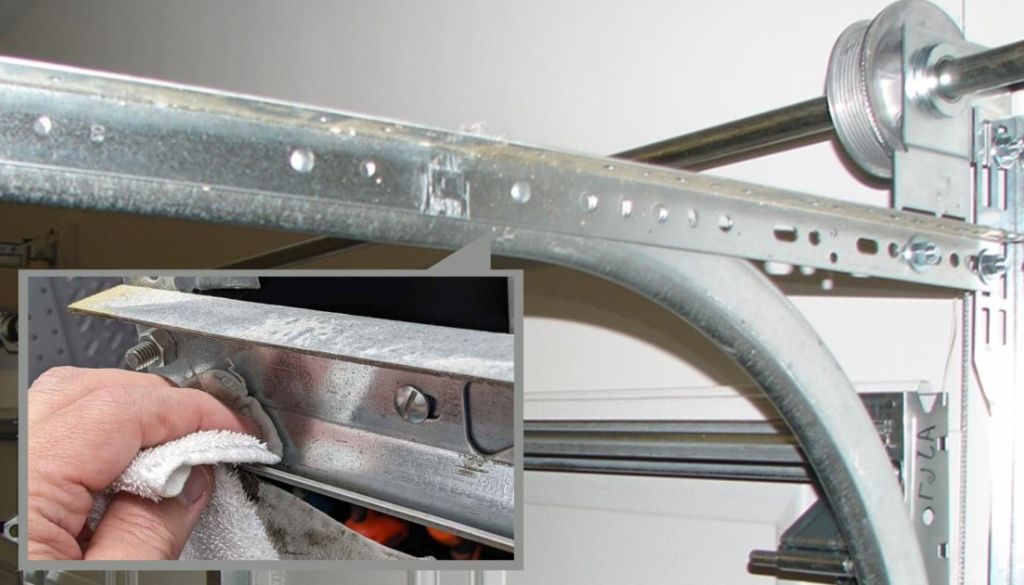
Garage door tracks do a quiet but essential job: they guide the rollers and keep your door moving in a straight, controlled line every time it opens and closes. When dirt, grease and grime build up inside them, that smooth movement turns rough — the door sticks, grinds, and forces the opener to work harder than it should.
The good news is that cleaning your tracks is one of the few garage door maintenance jobs that’s genuinely safe to do yourself, and it takes less than half an hour. Done a few times a year, it keeps your door quieter, smoother and longer-lasting. Below is a step-by-step guide to doing it properly, along with the one piece of advice most homeowners get wrong — whether or not to lubricate the tracks themselves. If cleaning does not restore smooth travel, the track may be bent rather than dirty — our guide to why a garage door gets stuck on one side covers what to look for next.
Why Cleaning Garage Door Tracks Matters
It improves performance. Clean tracks let the rollers glide freely, so the door opens smoothly and quietly instead of juddering or catching.
It prevents premature wear. Grit acts like sandpaper, grinding away at rollers and hardware with every cycle. Keeping the tracks clean extends the life of those components and the door as a whole.
It enhances safety. A door that moves unevenly or sticks can become unpredictable. Smooth, clean tracks help the door operate the way it was designed to. Grime and debris add friction the opener can read as an obstruction, and our guide explains why a garage door reverses partway down when resistance builds in the tracks.
Signs Your Garage Door Tracks Need Cleaning
Watch for these tell-tale signs:
- Grinding or scraping noises. Dirty tracks are a common culprit behind a harsh grinding or scraping noise, as the rollers struggle against built-up debris.
- Slow or uneven movement. A door that sticks, drags or moves unevenly often has grime restricting the rollers.
- Visible dirt and debris. If you can see dust, leaves, cobwebs or sticky residue in the channels, it’s time for a clean.
- Increased strain on the opener. When the door is harder to move, the motor works harder — and that extra strain can shorten its lifespan over time.
Tools and Supplies You’ll Need
You won’t need anything specialised:
- A vacuum cleaner with a hose or crevice attachment
- A stiff-bristled brush (an old toothbrush works for tight spots)
- A few microfibre cloths
- A mild detergent or a suitable degreaser for stubborn grime
- A spray lubricant — silicone-based or white lithium grease — for the rollers and hinges (not the tracks themselves)
How to Clean Garage Door Tracks: Step-by-Step
Step 1: Disconnect the opener. Pull the manual release cord so the door can’t be activated while you’re working. This is an important safety step.
Step 2: Inspect the tracks for damage. Before cleaning, look along each track for dents, bends or signs of misalignment. Cleaning fixes dirt — it won’t fix a damaged track, so note anything that looks off.
Step 3: Remove loose dirt and debris. Use the vacuum to lift out dust, leaves, cobwebs and loose grit from the full length of both tracks.
Step 4: Scrub away built-up grime. Dip the stiff brush in mild detergent or degreaser and work it into the channels to loosen hardened grease and dirt.
Step 5: Wipe the tracks clean. Run a microfibre cloth along each track to lift away the loosened residue. Repeat until the cloth comes away clean.
Step 6: Dry the tracks thoroughly. This matters on the Sunshine Coast especially — any leftover moisture invites rust. Dry both tracks completely with a fresh cloth.
Step 7: Test the door. Reconnect the opener and run the door through a full cycle. It should move more smoothly and quietly than before.

Should You Lubricate Garage Door Tracks?
Here’s the advice most guides get wrong: don’t lubricate the tracks themselves. Tracks are meant to stay clean and dry — they’re a guide rail, not a moving part. Spraying lubricant inside them simply attracts more dust and grit, creating a sticky paste that makes the problem worse.
Instead, apply lubricant to the parts that actually move: the rollers, hinges, springs and pivot points. A silicone-based spray or white lithium grease is ideal — a light application on these components keeps everything running smoothly. The hinges and hardware are exactly where that lubrication belongs. Wipe away any excess so it doesn’t drip or collect dust.
How Coastal Conditions Affect Your Tracks
Living near the coast brings extra challenges. Salt-laden air and high humidity accelerate rust and corrosion on metal tracks, rollers and hardware. That’s why drying the tracks thoroughly after cleaning is so important here, and why Sunshine Coast homes often benefit from cleaning their tracks a little more frequently than the general guidance suggests. If you spot orange staining or pitting on the tracks, corrosion has already started — and that’s worth having looked at.
Common Track Cleaning Mistakes to Avoid
A few errors can do more harm than good:
- Over-lubricating, or lubricating the tracks. As above — keep tracks dry and grease the moving parts instead.
- Using harsh or oil-based cleaners. These can leave residues that attract grime. A mild detergent is safer.
- Ignoring damage. Scrubbing a bent or misaligned track won’t fix the underlying issue.
- Forcing a stuck door. If the door won’t move freely after cleaning, stop — you may be dealing with a roller, spring or alignment problem rather than dirt.
A Few Other Maintenance Tasks Worth Doing
While you’ve got the door disconnected, it’s a good moment to check a few related parts. Inspect the rollers for cracks, flat spots or excessive play, and replace any that are visibly worn. Check the hinges and hardware for loose bolts and tighten them if needed. Test the door balance by lifting it halfway by hand — a balanced door stays put, while one that drifts up or down signals a spring issue that needs a technician. Look over the weather seals along the bottom and sides for cracks or gaps, and finish by testing the safety features: wave an object under a closing door to confirm the auto-reverse and sensors are working.
Roller Door vs Sectional Door Track Maintenance
The approach differs slightly by door type. Sectional doors run on horizontal and vertical tracks with separate rollers, so cleaning focuses on those channels and the roller wheels. Roller (curtain) doors coil into a drum and run in side guides rather than tracks — here, the side guides are what you keep clean and free of debris. The principle is the same for both: keep the guiding surfaces clean and dry, and lubricate only the moving parts.
When Cleaning Won’t Fix the Problem
Cleaning solves dirt-related issues, but some problems need a technician. Call a professional if you find:
- Bent or misaligned tracks, which need proper realignment or replacement, not cleaning.
- Spring or cable issues. These are high-tension components that are genuinely dangerous to work on — never attempt these yourself.
- Persistent noise or sticking after a thorough clean, which points to a deeper mechanical fault.
For any of these, our professional garage door repair team can diagnose and fix the issue safely.

Garage Door Track Maintenance Schedule
A simple routine keeps everything running well:
- Monthly: a quick visual inspection and a vacuum of loose debris.
- Every 3–6 months: a full clean of the tracks plus lubrication of the rollers, hinges and springs.
- Annually: a professional service. Booking yearly garage door maintenance and servicing catches the issues a DIY clean can’t, and keeps your whole door system in good shape.
Keeping your tracks clean is also one of the simplest ways to protect your garage door opener lifespan, since a freely moving door puts far less strain on the motor.
Frequently Asked Questions
How often should I clean my garage door tracks?
A light clean every three to six months suits most homes, more often in coastal or dusty areas.
Should I lubricate garage door tracks?
No — keep the tracks clean and dry, and lubricate the rollers, hinges and springs instead.
Can I use WD-40 on garage door tracks?
WD-40 is a cleaner and degreaser rather than a long-lasting lubricant, so it can help loosen grime — but don’t rely on it as a lubricant. Use a silicone spray or white lithium grease on the moving parts.
Can dirty tracks cause garage door noise?
Yes — built-up grit is one of the most common causes of grinding and scraping sounds.
Why is my garage door still noisy after cleaning?
If noise persists after a thorough clean, the cause is likely worn rollers, dry hinges, or a spring or alignment issue that needs a technician.
Need more than a clean?
Regular track cleaning will keep most doors running smoothly, but some jobs are best left to a professional. If your tracks are bent or misaligned, your door is sticking after a thorough clean, or something just doesn’t sound right, the team at Sunshine Coast Garage Door Guys is here to help — do it once, do it right. We’ll find the real cause rather than just treating the symptom, and give you honest advice on what does and doesn’t need doing.
Our qualified technicians service all major brands including Eco, Centurion and Gliderol, back their work with a workmanship guarantee, and have earned a 5.0-star reputation right across the Sunshine Coast. Whether you need a one-off repair, a track realignment, or an annual service to keep everything in top shape, we’ll get your door moving the way it should. Call (07) 5451 8776 for a free, no-obligation quote or to book a service — based at Unit 104/25 Chancellor Village Blvd, Sippy Downs QLD 4556, servicing Buderim, Caloundra, Maroochydore, Mooloolaba, Noosa and surrounds.
