
Your garage door works harder than most people realise. Every time it opens and closes, the hinges holding the door panels together flex, rotate, and bear load. Over time, that repetitive stress takes a toll. When hinges start to fail, the symptoms range from annoying squeaks to doors that bind, buckle, or come completely off track. Many hinge problems start when grime builds up in the tracks and throws the door’s movement out of alignment. Before you replace anything, it’s worth learning how to clean garage door tracks safely so your repaired hinges aren’t put under unnecessary stress.
This guide covers everything Sunshine Coast homeowners need to know about garage door hinge problems — what causes them, how to spot them early, what you can do yourself, and when to call in a qualified technician.
What Garage Door Hinges Actually Do
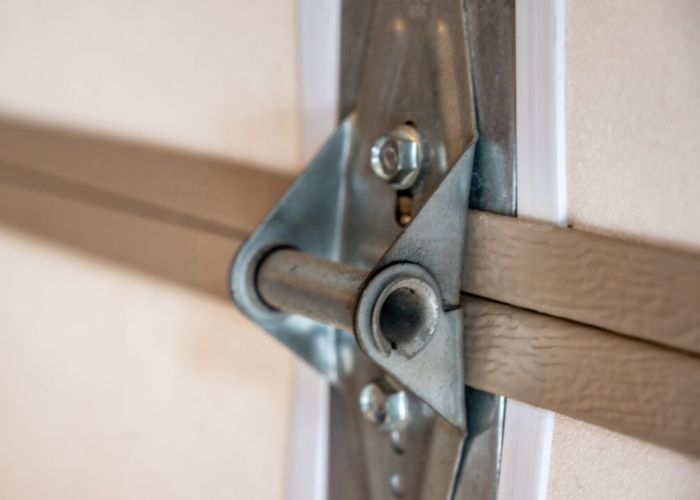
Most people don’t think about their garage door hinges until something goes wrong. Hinges are the mechanical connectors between each horizontal panel on a sectional garage door. Without them, the panels would be a rigid, immovable wall — they’d have no way to follow the curved track path that carries the door from vertical (closed) to horizontal (open) overhead.
Every hinge on your door serves a dual role: it joins adjacent panels and allows them to pivot relative to each other as the door moves. They also help distribute the door’s weight evenly across the panel system, which protects both the door and the opener mechanism. In short, the hinges keep the entire system working as a coordinated unit rather than a collection of separate parts.
There are several hinge types used across residential and commercial doors. Standard residential hinges are numbered by gauge (often No. 1 through No. 5), with higher numbers indicating heavier-gauge steel suited to wider or heavier doors. Heavy-duty hinges are used on commercial roller doors and large custom installations. The wrong hinge for the door’s weight or size is one of the most common causes of premature failure. Worn hinges force the rest of the door to work harder, which is why they feature in our list of practical ways to make a garage door last longer.
Common Signs Your Hinges Are in Trouble
Hinge problems don’t usually appear out of nowhere. Most failures follow a predictable pattern of warning signs, and catching them early can save you from a more expensive repair down the track.
Squeaking, grinding, or creaking during operation is typically the first sign. A small amount of noise is normal in a door that hasn’t been lubricated recently, but consistent grinding or metal-on-metal squealing usually points to a hinge that’s running dry, corroded, or sitting slightly out of alignment.
Uneven movement or binding on the tracks is more serious. If the door hesitates, jerks, or one side seems to move at a different speed than the other, a hinge may have cracked, bent, or pulled away from the panel slightly. Left unaddressed, this places excessive strain on the opener motor and the tracks.
Visible cracking, rust, or deformation on the hinge plate or barrel is a clear indicator that replacement is needed. A hinge that’s cracked through the metal is structurally compromised and can fail suddenly under load. Rust, particularly in coastal areas of the Sunshine Coast where salt air accelerates corrosion, eats through the metal and weakens the joint progressively.
Loose or missing fasteners at the hinge mounting point can mimic hinge failure even when the hinge itself is intact. Always check the bolts and screws before assuming the hinge needs replacing.

What Causes Garage Door Hinge Problems
Understanding the root cause is essential before reaching for a replacement part.
Wear from daily use is the most common driver. A garage door used four to six times daily will cycle through tens of thousands of movements over its lifetime. Each cycle places a small amount of stress on every hinge. Without regular lubrication and inspection, the cumulative wear compounds faster.
Improper installation creates misalignment from day one. If hinges aren’t centred correctly on the panel edges or the bolts aren’t torqued to the right tension, the hinge will wear unevenly and fail sooner than expected. This is one area where a professional installation pays dividends over years of service.
Moisture and corrosion are particularly relevant for Sunshine Coast properties. The region’s humidity and coastal salt air create an aggressive environment for uncoated steel components. Hinges without a galvanised or powder-coated finish will begin to rust noticeably within a few seasons if not treated.
Impact damage from cars, equipment, or debris can bend a hinge plate or crack it at the joint. Even a seemingly minor impact can distort the hinge enough to cause binding without being visually obvious.
Using the wrong hinge gauge for the door’s weight puts the component under constant overload. This is a common outcome when hinges are replaced with cheaper, lighter alternatives during a DIY repair.
Preventive Maintenance: What You Can Do Regularly
Most hinge problems are preventable with a consistent maintenance routine. These steps take less than thirty minutes and can be done by any homeowner.
Lubricate every hinge at least twice a year. Use a silicone-based spray or white lithium grease — not WD-40, which displaces moisture temporarily but doesn’t provide lasting lubrication. Apply directly to the hinge barrel and wipe away any excess. If you’re on the Sunshine Coast, consider doing this quarterly given the humidity.
Inspect each hinge visually during lubrication. Look for hairline cracks in the hinge plate, rust spots, loose bolts, or any deformation in the barrel. Catching a cracked hinge early means a straightforward part swap rather than a panel replacement.
Clean away dirt and debris around the hinge mounting points. Grit caught between the hinge and panel accelerates wear and can prevent the bolts from seating correctly. A damp cloth is sufficient for most routine cleaning.
Tighten any loose fasteners. Over time, the vibration of door operation can back off the mounting bolts. If a bolt hole has stripped, it may need a larger bolt or a timber backing block to restore holding strength.

Repair vs. Replacement: What the Right Choice Looks Like
For a hinge that’s simply dry and noisy, lubrication is the fix. For one that’s visibly cracked, badly corroded, or has deformed to the point where it’s no longer flat against the panel, replacement is the only sensible option.
DIY hinge replacement is feasible for hinges in the middle of a panel (away from the high-tension cable drum area at the bottom). The process involves releasing the tension from the door by disconnecting the opener, supporting the panel, unbolting the old hinge, positioning the new one carefully, and re-fastening to the correct torque. Use replacement hinges that match or exceed the gauge of the original.
Professional replacement is strongly recommended for bottom-bracket hinges and any hinge connected to the cable system. The bottom section of a sectional door operates under significant spring tension, and working in that zone without the right tools and training carries a real risk of injury. The team at Sunshine Coast Garage Door Guys handles hinge replacements across the Sunshine Coast daily — call (07) 5451 8776 or get in touch via sunshinecoastgaragedoorrepairs.com.au to book a same-day inspection.
Tips for Making Your Hinges Last
Beyond routine maintenance, a few habits significantly extend hinge lifespan.
Don’t force a door that’s resisting. If the opener is straining or the door is sticking, the instinct to push it through manually can crack or bend a hinge in seconds. Stop, disconnect the opener, and investigate before forcing the issue.
Set a biannual inspection date. Tying your hinge inspection to something seasonal — the start of summer and the start of winter, for example — makes it far more likely to actually happen. Use the inspection to lubricate, tighten, and visually check every hinge on the door.
Choose corrosion-resistant hardware for any replacement. Galvanised or stainless steel hinges cost modestly more than bare mild steel but last significantly longer in Queensland’s climate. It’s a worthwhile upgrade, particularly for properties within a few kilometres of the coast.
Frequently Asked Questions
How do I know if my garage door hinges need replacement?
If the hinge is cracked, visibly deformed, rusted through, or causing the door to bind or move unevenly, replacement is likely needed. A hinge that’s just noisy often just needs lubrication.
Can I lubricate garage door hinges myself?
Yes. Apply a silicone-based lubricant or white lithium grease to the hinge barrel twice a year. Avoid petroleum-based sprays like WD-40 as a long-term solution.
What is the lifespan of a typical garage door hinge?
With regular maintenance, quality steel hinges typically last ten to fifteen years. Cheap or under-gauge hinges in high-use applications may fail significantly sooner.
Are some hinge materials better for humid or coastal environments?
Yes. Galvanised or powder-coated steel and stainless steel options offer much better corrosion resistance than bare mild steel, making them the better choice for most Sunshine Coast properties.
When to Call a Professional
Some hinge jobs are genuinely DIY-friendly. Others — particularly anything near the cable drums, bottom brackets, or torsion spring system — are best left to a qualified technician. At Sunshine Coast Garage Door Guys, the team services all major garage door brands across the Sunshine Coast region, including Gliderol, Centurion, and Eco, with same-day availability for urgent repairs.
Contact the team at (07) 5451 8776, email [email protected], or visit sunshinecoastgaragedoorrepairs.com.au to book a service or get a free quote. With a workmanship guarantee and a straightforward “Do it Once, Do it Right” approach, hinge repairs on the Sunshine Coast are in good hands.
