
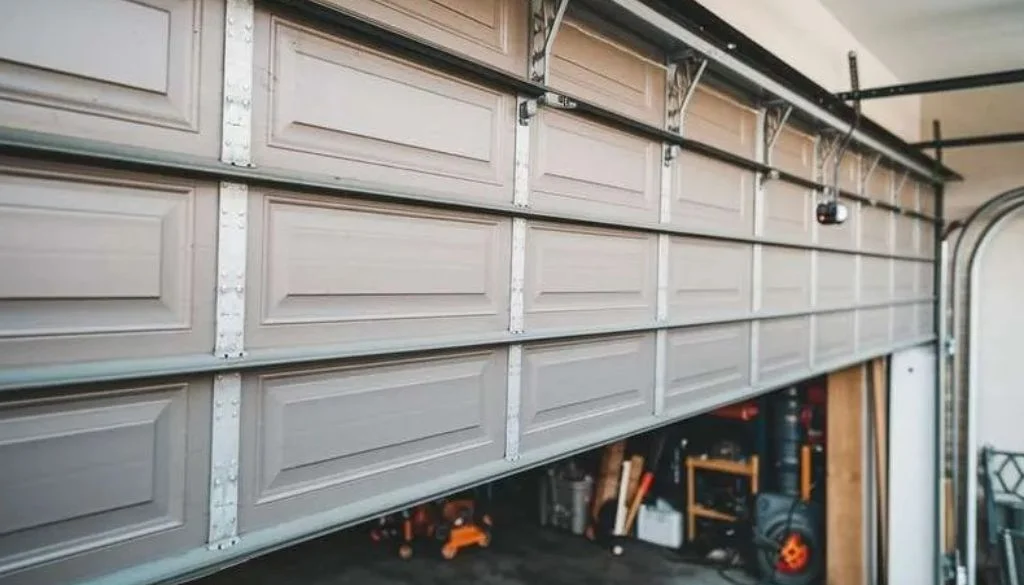
Every automatic garage door is built to reverse. When the opener senses an obstruction or an unsafe condition, it sends the door back up instead of pushing through. That is the safety system earning its keep.
The problem is a door that does it repeatedly with nothing in the way. That is not a safety feature working — it is a fault asking to be found.
And there is one detail that narrows it faster than anything else: when the reversal happens. Watch one cycle and note the moment the door changes direction. Immediately? Partway down? Or after it has already touched the floor? Those three answers lead to three genuinely different sets of causes, which is how this guide is organised. Read the chapter that matches your door and skip the rest.
Chapter One: It Reverses Immediately
The door starts down and bounces straight back, sometimes within a few centimetres of travel.
What’s usually behind it
This is the safety sensors, the overwhelming majority of the time. Two photoelectric units sit near the bottom of each track, passing an invisible beam between them. If that beam is broken — or if the opener cannot confirm it — the closing cycle stops before it starts.
Sunshine Coast conditions are hard on these. Salt film builds on the lenses, cobwebs and insect nests form fast in warm weather, and a bump from a bin or a bike knocks alignment out easily.
What to check
Clean both lenses with a dry cloth. Clear the beam path completely. Then look at each unit’s indicator light — steady generally means aligned, blinking or dark generally means blocked or out of aim. Our guide on how to align garage door sensors shows what a correctly aimed pair looks like.
If the sensors check out, look for other signals: a flashing diagnostic light on the motor unit, a new noise, or the wall control behaving differently to the remote.
Stop here if
The sensors are clean and aligned and it still reverses immediately. At that point you are looking at sensor wiring or an internal opener fault, and both need testing rather than guessing.
Chapter Two: It Reverses Partway Down
The door travels normally, then hits a point where it stops and returns. Often the same point every time.
What’s usually behind it
Resistance. Openers monitor how much force each cycle takes, and when friction rises past a threshold, the opener reads it as an obstruction and protects itself by reversing.
That resistance comes from somewhere physical. Bent or dented tracks, dry or seized rollers, worn hinges, misaligned brackets — any of these make the door harder to move at a specific point in its travel. Grime inside the track is a frequent and entirely fixable version, which is why cleaning garage door tracks properly is worth doing regularly.
Poor balance produces the same symptom. A balanced door is carried by its springs, so the opener only guides it. When springs weaken, the door gets heavy and the opener struggles well before the floor.
What to check
Note exactly where it reverses — that spot usually holds the answer. Look along both tracks for bends, dents and gaps. Watch whether the rollers spin or slide.
Then test the balance, which you can do without tools. Pull the emergency release cord, lift the door halfway by hand and let go. A balanced door holds position. One that drops or shoots upward has a spring problem. Our article on when to adjust garage door springs covers the warning signs — though the adjustment itself is never DIY.
Stop here if
The door feels heavy by hand, or you can see a bent track. Do not lever a track back into shape, and do not keep running the opener against resistance. Every forced cycle spreads the wear.

Chapter Three: It Reaches the Floor, Then Opens Again
The door completes its travel, touches down, and immediately runs back up.
What’s usually behind it
This one is different, and it is where most people misdiagnose. The usual cause is the close travel limit — the setting that tells the opener where the floor is. If it is set too low, the opener keeps driving after the door has already landed, reads that resistance as an obstruction, and reverses.
The second possibility is something stopping the door seating cleanly: a perished bottom seal, a lifted concrete edge, debris along the floor line, or the door meeting the ground unevenly because one side lands first.
What to check
Look along the floor where the door lands. Clear anything there and check the seal for cracking or hardening.
Then look at how the door meets the floor. Level contact points to a settings issue. Uneven contact points to a mechanical one, and no amount of limit adjustment will fix a door that is landing crooked.
Travel limits are adjusted differently on every model, so use your opener’s manual rather than generic instructions. Getting this wrong drives a heavy door into concrete.
Stop here if
The door lands unevenly, or adjusting to the manual’s procedure does not resolve it. Both point past the settings to the door itself.

Five Questions Worth Answering First
Can I just hold the wall button to force it closed?
That is a safety override, not a fix. It closes the door with the protection disabled and leaves the fault untouched. Use it to secure the house once if you must, then get the cause diagnosed.
Why does it only reverse in the afternoon?
Almost certainly direct sun striking the receiving sensor lens. The beam gets overwhelmed at one particular angle, which is why the fault appears and disappears on a schedule.
Can weather cause reversing?
Yes. Heavy rain drives debris along the floor line, humidity swells timber frames, and moisture on a lens can scatter the beam.
How do I tell a sensor fault from an opener fault?
Timing. Immediate reversal points to the sensors. Reversal partway down points to resistance the opener is detecting.
Will a new opener fix this?
Not if the door is the problem. Fitting a new unit to a heavy or binding door usually produces the same reversing within months.
Things That Apply Whichever Chapter You’re In
Never bypass the safety sensors
Taping the beam, twisting the wires together, or holding the wall button to force the door shut does not fix anything. It removes the protection that stops a heavy door closing on a child, a pet or a car, and leaves the original fault untouched. If the sensors keep faulting, get them diagnosed.
Stop cycling the opener
Whatever the cause, repeatedly pressing the button drives a damaged component harder against whatever is stopping it. Openers wear out early far more often from fighting a faulty door than from age.
Call a technician if
The door closes crooked, feels heavy by hand, or you can see a broken spring or loose cable. These components hold enormous stored tension — our guide to garage door spring replacement explains why the work belongs with someone trained. Also call if the reversing continues after you have worked through your chapter, since separating an electronic fault from a mechanical one reliably needs the sensors, opener settings and door condition tested together.
Keep it from coming back
Keep the sensor area clear — no bins, bikes or boxes drifting into the beam — and wipe the lenses when you clean. Treat new noises and slight hesitation as early warnings. And book regular servicing, where balance, hardware, sensors and travel settings all get checked in one visit. Our garage door inspection checklist covers what a proper service should include.
Still Reversing? Let Us Take a Look
If the sensors are clean, the doorway is clear and your door still refuses to stay closed, the next step is a proper diagnosis.
Sunshine Coast Garage Door Guys is a locally run business servicing the entire Sunshine Coast, from Buderim and Sippy Downs through to Mountain Creek and Sunshine Beach. Our qualified technicians test safety sensors and wiring, check opener travel settings, and assess the door’s balance, springs, cables, tracks and rollers. We service all the major Australian brands, including Eco, Centurion and Gliderol, and every job is backed by our workmanship guarantee and a simple mentality: do it once, do it right.
Book a garage door repair, or arrange opener repair if the fault sits with the unit itself. Call 07 5451 8776 for a free quote or same-day service.
